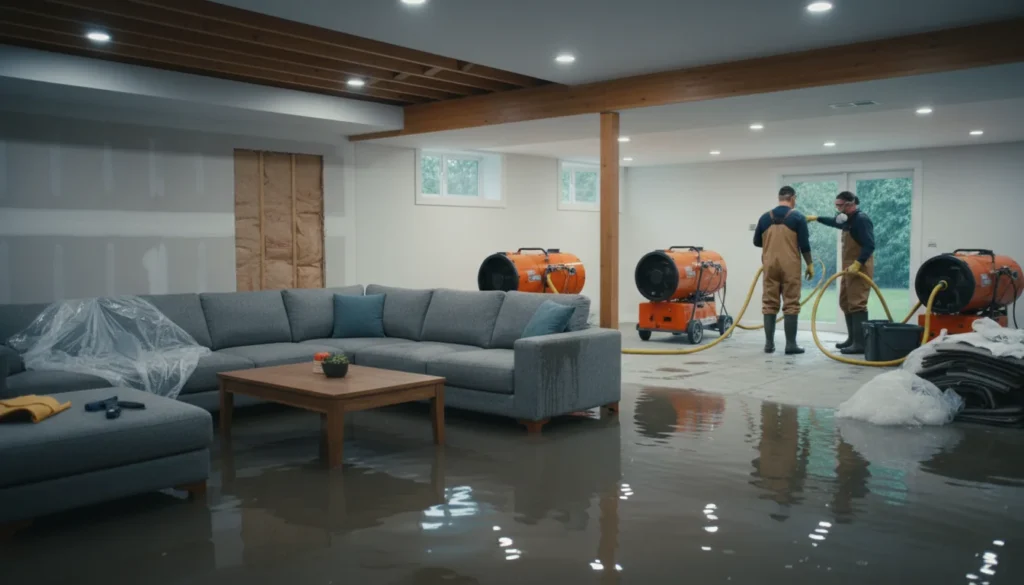
To restore your basement quickly after flooding in Thurston County, shut off electricity to the area immediately, pump out standing water within the first hour if possible, and start drying with fans and dehumidifiers to hit under 15% moisture in 48-72 hours. In Olympia, where winter storms dump 5-10 inches of rain weekly during peak events, delaying even a day lets mold take hold in our damp basements. Focus on safety first, then extraction, drying, cleaning, and rebuilding in that order for minimal damage.
Basement flooding hits hard here in Thurston County because so many Olympia homes sit on clay-heavy soils that hold water like a sponge, and our older housing stock from the 1960s-80s often lacks modern waterproofing. I’ve pulled soggy carpet out of hundreds of these spaces after atmospheric rivers stall over Puget Sound, and the key difference between a quick fix and months of headaches is speed and knowing when DIY stops making sense.
Common Causes of Basement Flooding in Thurston County
Rain doesn’t just fall here; it saturates. Olympia’s microclimate funnels moisture from the Olympics into South Sound, overwhelming gutters and downspouts on homes without extensions reaching 5-6 feet from foundations. Here’s what I see most:
- Storm sewer backups: During El Niño winters, like 2023’s deluges, city lines in Central Olympia overflow, pushing water up through floor drains.
- Sump pump failures: These workhorses quit when power flickers or floats stick—common in our frequent outages from wind-whipped Doug firs.
- Foundation cracks: Hydrostatic pressure from our water table spiking 2-3 feet post-rain forces water through unsealed mortar joints in concrete blocks.
- Window well overflows: Egress windows flood fast if covers aren’t secured, especially in SW Olympia where slopes direct runoff straight down.
Less common but brutal: burst supply lines from frozen pipes in unheated basements during rare freezes.
Warning Signs to Spot Before It’s a Pool
You don’t always get a foot of water overnight. Watch for these in your Thurston County basement:
| Sign | Severity | Action Time |
|---|---|---|
| Damp spots on walls or musty smell | Low | Days |
| Bubbling paint or efflorescence (white powdery residue) | Medium | Hours |
| Sump pump running constantly or water seeping at baseboards | High | Minutes |
| Standing water or electrical sparks/humming | Critical | Now |
In NE Olympia neighborhoods with older craftsman homes, that efflorescence often signals rising groundwater from Capitol Lake influences.
What to Do Right Now: Immediate Steps for Homeowners
Safety trumps all. Here’s the exact sequence I’ve coached hundreds through:
- Evacuate and power down: Flip the main breaker for the basement. Never wade in water with outlets humming—electrocution risk skyrockets.
- Remove water: If under 2 inches, use a wet vac; deeper needs a gas or electric pump (rent one for $50/day). Aim to extract 90% in first 4 hours.
- Ventilate: Open windows if safe, run box fans outward, and get a dehumidifier pulling 50+ pints/day. Target air under 60% humidity.
- Salvage belongings: Prioritize papers/docs, electronics; rinse mud off fabrics immediately in cold water, never hot.
DIY works for minor seeps under 1 inch, but if water’s over baseboards or smells sewer-y, stop—call for emergency storm damage cleanup. Pros have containment gear to avoid cross-contamination.
How a Pro Handles Basement Restoration in Olympia
On-site, we start with moisture meters probing walls to 18 inches deep—anything over 17% gets cut out. Step-by-step:
Extraction Phase (Day 1)
Truck-mounted extractors pull 100-200 gallons/minute, faster than rentals. We block off with plastic sheeting to isolate.
Drying Phase (Days 1-5)
Air movers (20+ units) create 500 CFM turbulence, paired with commercial dehumidifiers hitting 130 pints/day each. Daily psychrometric checks ensure progress; basements here take 72-96 hours due to concrete’s thermal mass.
Cleaning and Disinfectation (Days 3-7)
HEPA vacs remove Category 2/3 contaminants (gray/black water common from sewers). EPA-registered antimicrobials like quaternary ammonium kill 99.9% mold spores; no bleach—it’s useless on porous surfaces.
Rebuild (Week 2+)
Inject foam into cracks, install interior drains if needed. In NE Olympia, we often add battery backups to sumps after.
Total cost? $3,000-$15,000 depending on square footage and contamination; insurance covers most if documented.
Olympia’s Local Factors That Amplify Basement Flooding
Our marine west coast climate means 50+ inches rain yearly, concentrated November-March. Thurston’s glacial till soils drain poorly, holding water near foundations. Add aging homes (median build 1978) with shallow footings, and you’re primed. SE Olympia sees worse from Budd Inlet tides backing up storm drains during king tides. Wind from the Sound topples trees onto roofs, compounding roof leaks into interiors.
Prevention Strategies Tailored to Thurston County Homes
Don’t wait for the next ARk storm:
- Extend downspouts: 6 feet out, sloped away; bury in gravel trenches.
- Grade soil: 6-inch drop over 10 feet from house; add French drains if flat.
- Service sump yearly: Clean pit, test float, add backup (under $300).
- Seal cracks: Hydraulic cement for active leaks, polyurethane for dormant.
- Window wells: Plastic covers and gravel backfill to 12 inches.
For SE Olympia properties near inlets, elevate HVAC intakes. Gutter guards cut debris 80%, but clean quarterly.
Quick restoration hinges on these steps, but if water’s deep or contaminated, pros prevent secondary mold costing 10x more.
Leave a Reply