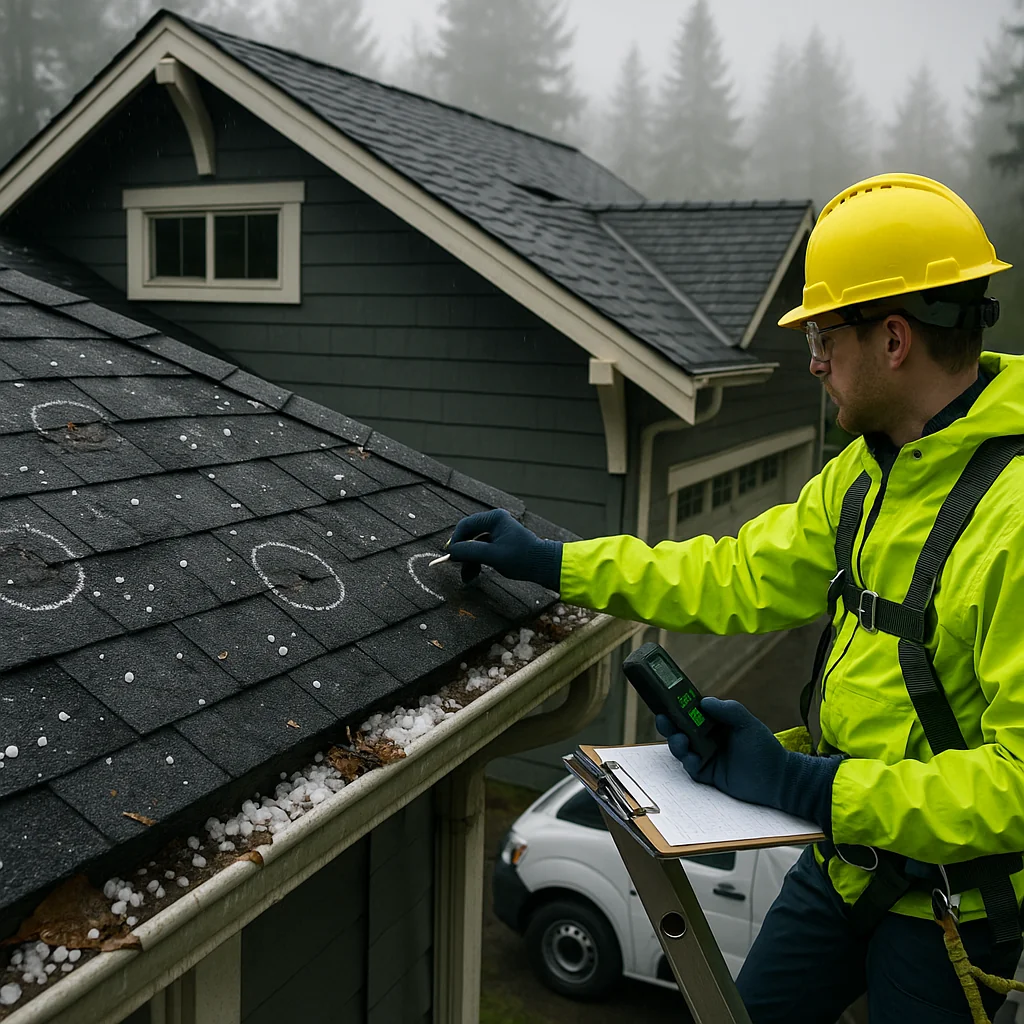
Hail damage in Olympia shows up as dents and cracks on metal gutters, granule loss on asphalt shingles, and pockmarks on siding—especially after our sudden spring thunderstorms. To fix it fast, tarp vulnerable spots immediately and inspect from a ladder for hidden breaks that could leak during our next rain. Getting a professional assessment within 48 hours prevents water intrusion that turns small hits into major repairs.
Here in Olympia, hail storms might not roar like in the plains, but they pack a punch on our older homes and shake loose siding battered by constant dampness. I’ve climbed hundreds of roofs after these events, and ignoring early signs always leads to bigger headaches when Puget Sound moisture seeps in.
What Causes Hail Damage in Olympia Homes
Our hail forms in unstable air masses rolling off the Cascades during late spring or early fall fronts. Stones range from pea-sized to golf balls, falling at 20-40 mph. Asphalt shingle roofs, common on 70s and 80s builds around town, bruise easily because their fiberglass mats compress under impact. Metal roofs dent if the gauge is over 29; thicker 26-gauge holds better but costs more upfront.
Wind-driven hail sideswipes south-facing slopes harder—think homes in SE Olympia where afternoon storms hit direct. Siding like vinyl or cedar cracks from the flex, and soft evergreen wood trim splits. Soil here, that heavy clay, holds water post-storm, softening ground around foundations and amplifying any gutter blowouts.
Warning Signs of Hail Damage You Can’t Ignore
Walk your property the morning after—look up at gutters first. Dents bigger than a quarter mean hail over dime-sized. On shingles, run your hand over the surface; fresh granules in your palm signal hits that stripped the protective layer, leaving mats exposed to UV and rain.
Siding shows random circular bruises or alligatoring cracks. Windows might have chipped edges on soft aluminum frames. Inside, check attics for new water stains or loose insulation—early leaks from cracked underlayment.
| Sign | Severity Level | Immediate Action |
|---|---|---|
| Small dents on gutters | Low | Monitor, clean debris |
| Granule loss on 20%+ shingles | Medium | Tarp peaks, call inspector |
| Cracked shingles or siding | High | Secure with tarps, pro assessment |
| Interior leaks | Critical | Extract water, full cleanup |
What to Do Right Now After a Hail Storm
- Photograph everything from ground and roof level before touching—insurance needs proof.
- Secure tarps over damaged roof sections using 2x4s and sandbags; Olympia’s winds gust to 50 mph, so batten down tight.
- Clear gutters of hail-melt slush to avoid overflows flooding your basement.
- Avoid ladders if wet; our mossy roofs slip easy.
- Check for flood water extraction needs around foundations—clay soil pools fast.
DIY minor gutter dents with a rubber mallet if under 1/4 inch, but skip roofs; one wrong step voids warranties.
How a Pro Handles Hail Damage Cleanup
We start with drone scans for full coverage—safer than ladders on steep pitches common in NW Olympia hills. Then core samples on shingles confirm mat damage; insurance adjusts claims on this evidence.
Cleanup means vacuuming granules, extracting any intruded water with truck-mount systems pulling 100 gallons per minute. For roofs, we chalk-line hits to map replacement zones—no full rips unless total loss. Siding patches match profiles; vinyl heat-welds seamless.
Drying attics with dehus and air movers hits 20% moisture fast, preventing black mold that thrives in our 60-80% humidity. Full jobs run 2-5 days, depending on square footage.
Olympia’s Local Twist on Hail Damage
Puget Sound convergence zone funnels storms right over us, dumping hail when cold air clashes with marine moisture. Older ranch styles in SW Olympia suffer most—their low slopes shed hail slower, and aging asphalt from 40-year roofs granules out quicker.
Winter follow-up rains turn hail cracks into rot; I’ve seen soffits collapse from ignored soft spots. Our evergreen shade keeps roofs damp longer, accelerating granule erosion even without hail.
Prevention Strategies Tailored for Olympia
- Upgrade to impact-rated shingles (Class 4) if replacing—pass 2-inch steel balls dropped from 20 feet.
- Install leaf guards; hail clogs standard ones, backing up meltwater.
- Trim overhanging firs—branches act like hail amplifiers on impact.
- Annual spring inspections catch pre-hail weaknesses like loose flashing.
- Consider metal roofing retrofits for long-term; our mild winters mean 50+ year lifespans.
Seal cracks in cedar siding yearly with elastomeric caulk; it flexes with our wet-dry cycles.
When to Call a Pro for Olympia Hail Damage
If you spot medium or high severity signs, or any interior water, don’t wait—our rains start within days. Olympia Storm Cleanup Pros specializes in Storm Damage Cleanup in Olympia, handling everything from assessment to full restoration. Give us a call at (360) 299-5978 for a no-obligation roof scan; we’ve got the gear to keep your home dry through the next front.
Leave a Reply