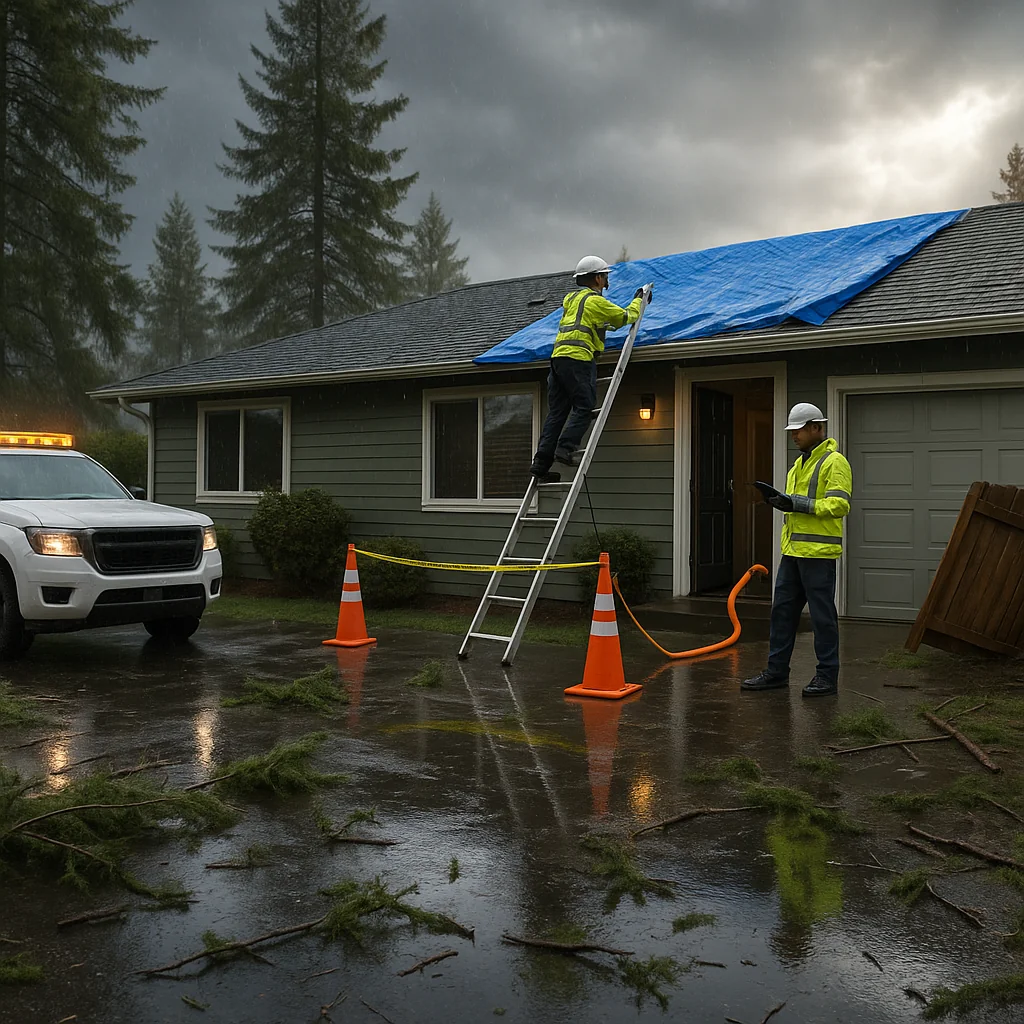
After a storm slams your Olympia property, prioritize safety first: avoid entering if you see leaning structures, flooding over electrical panels, or downed lines—Olympia’s windy Puget Sound gales often topple trees onto roofs. Document everything with photos from a safe distance for insurance, then if safe, tarp large roof holes or divert water to prevent mold in our damp climate. Call pros immediately if water’s inside or power’s out, as hidden damage spreads fast in our soggy soils.
Storms here aren’t just rain; they’re wind-whipped events that soak older homes and shift foundations. Acting fast cuts repair costs by thousands and keeps your family safe—I’ve pulled soggy insulation from attics hours after downpours, watching mold start in under 24 hours.
Common Causes of Storm Damage in Olympia
Olympia’s position at the base of Capitol Lake and near Budd Inlet means heavy rains combine with 50+ mph winds from fall through spring, driving water under siding and into crawlspaces. Saturated clay soils expand, cracking slabs in 1960s ranchers common around Central Olympia. Tree limbs—those big firs and madrones—snap and puncture roofs, while hail dents asphalt shingles on homes south of town.
Flash floods from the Deschutes River overflow hit low-lying South Olympia spots, sending 6-12 inches of muddy water into garages. Wind-driven rain forces entry through vents and eaves, unlike dry-season issues elsewhere.
Warning Signs You Can’t Miss
Look for these red flags I’ve checked on hundreds of local calls:
- Water stains or drips on ceilings—dark spots mean roof leaks, common after 40 mph gusts strip granules.
- Warped floors or buckling hardwood—signals subfloor saturation; Olympia’s humidity accelerates this.
- Musty odors or visible mold—starts in 48 hours on wet drywall.
- Cracked walls or sticking doors—foundation shifts from soil swell.
- Sparking outlets or flickering lights—electrical hazards from water intrusion.
| Severity | Signs | Action Time |
|---|---|---|
| Low | Minor branches, small leaks | 24-48 hours |
| Medium | Roof holes, interior water | Within 12 hours |
| High | Structural lean, deep flooding | Immediately |
This table matches what we see site-to-site; high-severity hits 20% of calls post-big storms.
Step-by-Step: What to Do Right Now
Follow this order—I’ve refined it from Olympia jobs:
- Assess safety: From outside, scan for hazards. No power? Use flashlights.
- Document: Phone pics of exterior, interior if safe—insurers need before/after.
- Secure exterior: Tarp roofs with 6-mil plastic nailed securely; sandbag low areas. DIY tarps hold 2-3 days in light rain.
- Stop water inside: Mop floors, place buckets. Run fans if dry power available—dehumidifiers beat AC units here.
- Check utilities: Shut main water if pipes burst; flip breakers for wet areas.
DIY works for superficial stuff, but skip if you’ve got basement flooding cleanup needs—our clay soils trap water deep.
Olympia-Specific Storm Challenges
Our marine climate dumps 50+ inches yearly, but November-February storms pack 4-6 inches in 24 hours, overwhelming gutters on 1950s homes in Central Olympia. Wind from the Sound pushes rain horizontal, sneaking into attics via ridge vents. Older wood-frame houses settle unevenly on expansive soils, worsening cracks post-soak.
In SW Olympia, proximity to Capitol Lake means backflow into sewers during king tides plus storms. South Olympia sees more tree fall from mature lots, puncturing siding. Heat pumps short out from water more than furnaces—check drip pans first.
How Pros Handle Post-Storm Cleanup
We arrive with moisture meters reading 20%+ in walls—cut out wet drywall to studs, dry with truck-mount dehus at 100 pints/hour. Inject foam into crawlspaces for vapor barriers; most Olympia homes lack them. Roofers sister rafters on wind-lifted sections.
For electrical, we test GFCIs and rewire soaked boxes. Insurance? We provide Xactimate estimates matching adjusters. Burst pipe water damage from frozen lines in rare cold snaps gets full antimicrobial treatment.
In SW Olympia, we trench French drains post-flood. Pros extract 500-1000 gallons from basements, unlike shop vacs at 5 gph.
Prevention for Olympia’s Next Storm
Trim trees 15 feet from house—overhanging limbs cause 60% roof punctures here. Install 6-inch gutters with leaf guards; extend downspouts 5 feet from foundation. Grade soil 6 inches drop over 10 feet away.
Seal eaves with metal flashing; add ridge vent foam baffles. Elevate appliances in South Olympia flood zones. Annual crawlspace checks catch moisture before storms amplify it.
When to Call a Pro in Olympia
If water’s reached HVAC, walls are soft, or you smell gas, stop DIY—mold remediation needs HEPA vacs and EPA-registered killers. Structural doubts? Engineers first. For reliable (360) 299-5978, Olympia Storm Cleanup Pros gets there fast, handling permits and claims seamlessly.
Leave a Reply