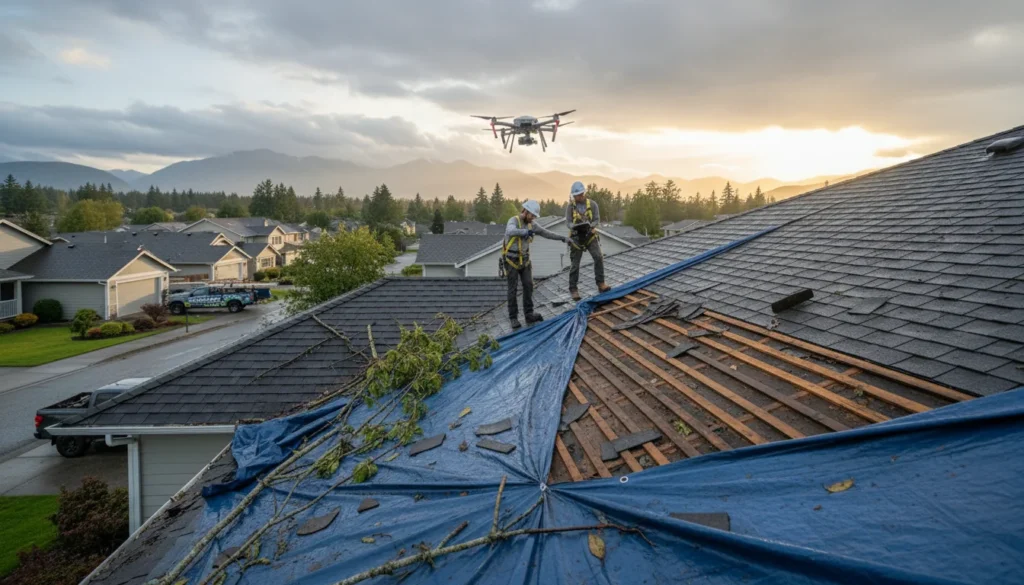
In Olympia, after a windstorm or heavy rain, most roof damage calls for repair if it’s limited to a few loose shingles or minor cracks—especially on roofs under 15 years old. But if you see widespread granule loss, sagging sections, or water stains inside from multiple leaks, replacement is usually the safer, longer-term fix given our relentless wet seasons that turn small issues into mold factories. I’ve climbed hundreds of these roofs post-storm, and waiting often costs homeowners double later.
Olympia homeowners face this dilemma every fall and winter when Pacific Northwest gales rip through, leaving roofs battered and budgets strained. Deciding repair or replace isn’t just about cost—it’s about matching the fix to our soggy climate and older housing stock, where patching a 30-year-old asphalt shingle roof might buy a season but not a decade.
Common Causes of Roof Storm Damage Here
Our storms hit roofs hard because of Olympia’s microclimate: fierce straight-line winds from the south, dumping 50+ mph gusts, combined with needles of driving rain. Tree limbs from the area’s mature firs and maples snap and puncture shingles, while hail—rare but brutal when it rolls in from the Olympics—pits surfaces like buckshot. Older homes in Central Olympia, built in the ’70s and ’80s with basic 3-tab shingles, take the brunt since they lack the impact resistance of modern architectural styles.
Wind uplift is sneaky: it doesn’t always tear shingles off outright but loosens nails, creating gaps for water infiltration. Add in ice dams during those rare freezes—water backs up under shingles, seeps in, and rots decking. And don’t forget debris: pine needles clog valleys, holding moisture against underlayment until it fails.
Warning Signs That Demand Attention
From ground level, scan for curled or missing shingles, especially along ridges where wind hits first. Granules in gutters mean abrasion from wind-blown debris—losing that protective layer speeds UV damage. Inside, look for ceiling stains or bubbled paint; in attics, check for daylight through cracks or wet insulation clumped like soggy bread.
Serious red flags include sagging rafters (jack up that area ASAP) or musty odors signaling rot. Here’s a quick severity guide:
| Sign | Severity | Action |
|---|---|---|
| 1-5 missing shingles | Low | DIY patch if dry, pro for warranty |
| Granule loss >50% on affected area | Medium | Inspect full roof; likely repair |
| Multiple interior leaks or sagging | High | Replace; tarp immediately |
| Visible decking rot | Critical | Evacuate if unsafe; full replacement |
What to Do Right After a Storm Hits
Safety first: don’t climb a wet roof—slips kill more than falls here with our slick moss. Tarp large gaps using 2x4s to secure edges against wind; skip if lightning lingers. Document everything with photos from all angles, including gutters and downspouts clogged by storm debris.
- Check attic for water pooling—use buckets and fans to dry.
- Clear gutters to prevent backups.
- Avoid DIY fixes beyond tarping; sealant on wet shingles washes off in our rains.
- Call insurance early—they cover tarping and temp repairs.
For water that seeped inside, act fast on emergency storm damage cleanup to halt mold, which thrives in 48 hours at our 50-60°F temps.
How Pros Assess and Decide Repair vs. Replace
We start with a drone flyover for a full layout, then ladder up for close inspection: moisture meter on decking (over 20% means rot), core samples on suspect shingles for delamination, and infrared camera at night to spot hidden leaks glowing as cool spots. In SW Olympia neighborhoods with steep pitches, we probe for loose flashing around chimneys, a common fail point.
Repair works for isolated hits: new shingles matched to existing, sealed with Olympic-grade mastic, underlayment patched with ice-and-water shield. Replacement? Full tear-off to 24-inch rafter tails, new synthetic underlayment, and laminated shingles rated for 130 mph winds. Cost ballpark: $5-8K repair for 200 sq ft, $15-25K full for average rancher—insurance often covers 80% if documented.
Key decider: if more than 25% damaged or roof over 20 years, replace preserves equity. We layer synthetic felt now, not old #15, for better breathability against our humidity.
Olympia’s Roof Challenges You Need to Know
Our marine climate means roofs age fast: 50 inches annual rain erodes edges, while winter winds from Budd Inlet scour south-facing slopes. Homes in SE Olympia near Chambers Lake deal extra with flying branches from overgrown lots. Soil here—silty from old lake beds—shifts foundations slightly, stressing rooflines over decades.
Seasonal spikes: October Nor’westers, December winds with 2-inch rain/hour. Older cedar shakes on Victorians crack under hail; asphalt in track homes granules off by year 10 if not maintained. Leaks lead to burst pipe water damage risks if attic pipes freeze from poor insulation.
Prevention Strategies Tailored to Olympia
Trim trees 10+ feet from eaves—hire certified arborists for firs. Annual spring clean: blow needles, inspect for soft spots by walking with a buddy. Upgrade to Class A fire-rated architectural shingles if replacing; add ridge vents for airflow against moss.
- Install leaf guards sized for big leaves.
- Seal penetrations yearly with polyurethane caulk.
- Consider metal roofs for longevity in wind zones, though pricier upfront.
DIY moss kill with diluted bleach spray, but pros use zinc strips for passive control.
When to Call a Pro for Roof Storm Damage in Olympia
Grab your phone if damage exceeds 10 shingles, any interior water, or you’re over 50 unsure on ladder. For Storm Damage Cleanup in Olympia, Olympia Storm Cleanup Pros handles the full spectrum—from tarping to full restoration. Give us a call at (360) 299-5978 to get an on-site assessment before rains return.
Leave a Reply