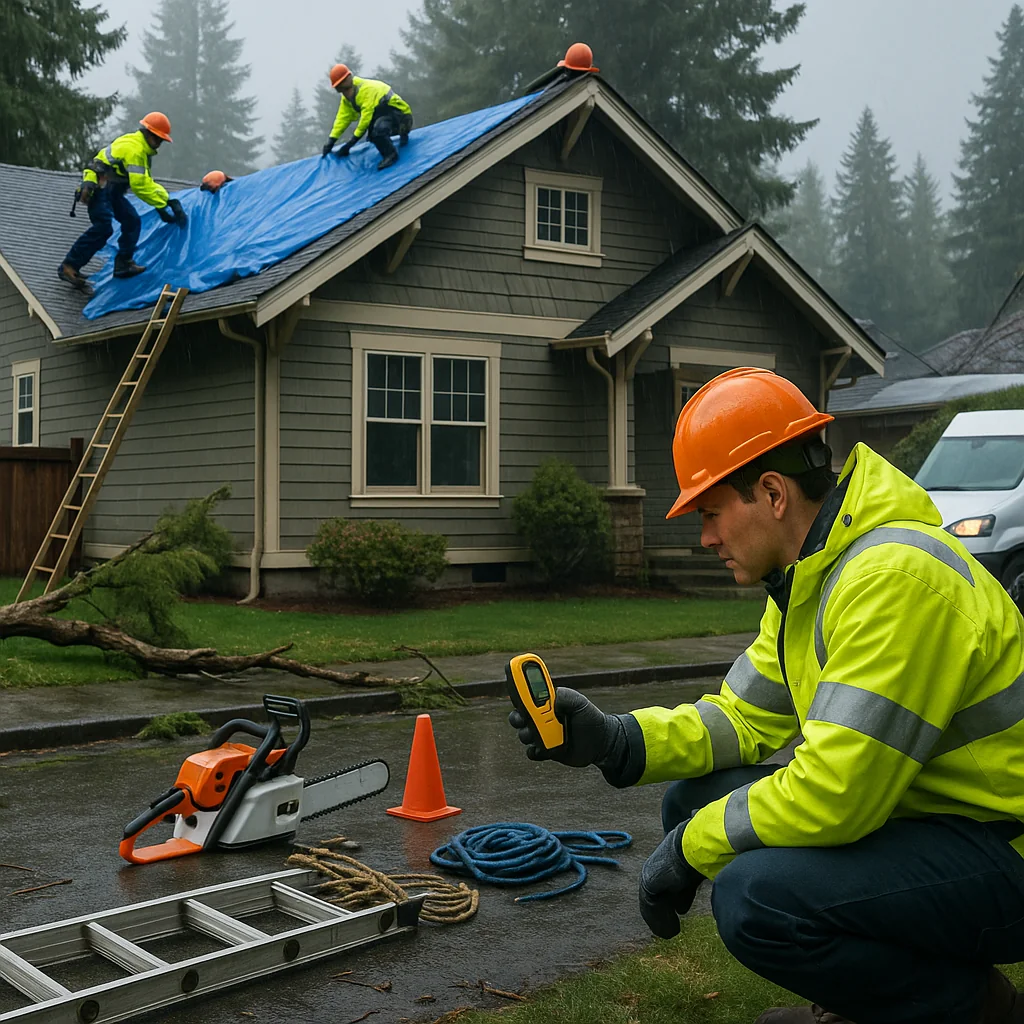
Olympia homeowners often fall for myths like thinking fans alone dry out water damage or that tarps fully protect roofs during windstorms. These misconceptions delay proper Storm Damage Cleanup in Olympia and lead to mold, rot, and bigger repair bills in our soggy climate. Stop believing them to minimize damage from our frequent November-to-March downpours and gusts up to 50 mph.
Our rainy season hits hard here, with average winter rainfall over 20 inches soaking roofs, foundations, and crawlspaces. Older homes in neighborhoods like SW Olympia, built before modern codes, amplify risks from saturated clay soils that shift under weight. Believing myths worsens this, turning minor issues into structural failures I’ve seen hundreds of times on job sites.
Myth 1: Fans and Dehumidifiers Alone Will Dry Everything Out
After a storm floods your basement or soaks carpets, many grab box fans thinking airflow fixes it. In Olympia’s 80-90% humidity winters, this just spreads moisture deeper into walls and subfloors. Porous materials like drywall absorb water fast—within 24-48 hours, mold spores activate.
Real fix: Extract standing water first with truck-mounted pumps, then use commercial dehumidifiers set to 30-40% RH. Pros cut out saturated drywall at the 18-inch waterline mark, a standard we’ve followed on sites from NW Olympia to Tumwater. DIY fans often leave hidden dampness that rots joists over months.
- Check for buckling baseboards or soft spots underfoot—these signal water wicking up 2-3 feet.
- Use a moisture meter; readings over 17% mean professional intervention.
When flooding hits hard, our flood water extraction process removes gallons quickly to prevent this myth’s fallout.
Myth 2: A Tarp on the Roof Stops All Leaks Until Repairs
Windstorms rip shingles off, and folks staple tarps thinking they’re sealed. Olympia’s south-southeast gales lift edges, channeling rain under them into attics. I’ve pulled tarps off homes in SW Olympia where water pooled inches deep inside, staining rafters black.
Pro approach: Secure tarps with 2×4 battens screwed every 2 feet, but only as temporary. Inspect valleys and flashing—common failure points in our older shake roofs. Seal with butyl tape and chicken wire for bird-proofing. Full replacement needed if more than 20% damaged; partial patches fail in freeze-thaw cycles.
| Myth Indicator | Reality Check | Severity |
|---|---|---|
| Tarp flapping | Water intrusion likely | High—call now |
| No visible leaks | Attic insulation saturated | Medium—inspect |
| Edges sealed | Wind still penetrates | Low if battened |
Myth 3: Insurance Covers All Storm Damage Without Hassle
Policyholders assume wind or rain damage pays out fully. Exclusions hit hard: poor maintenance voids claims, like unsealed vents from prior neglect. In Olympia, 30-40% of claims get partial denials because homeowners didn’t mitigate fast—insurers require photos and receipts proving action within 48 hours.
Document everything: Timestamped pics of damage, moisture readings, and contractor bids. We’ve helped clients in NW Olympia recover full payouts by providing detailed logs. Avoid the myth by acting first, claiming second—don’t wait for adjusters, as delays grow mold evidence against you.
Steps Insurers Want:
- Secure property (board windows, tarp properly).
- Extract water to prevent secondary damage.
- Log all with dates/times.
For urgent cases, our emergency storm damage cleanup starts the mitigation clock right.
Myth 4: Minor Leaks and Wet Spots Dry on Their Own
A small roof drip or siding gap seems trivial post-storm. Our clay-heavy soils hold water, causing basements to sweat and walls to bow. In 40-year-old homes around Capitol Lake, I’ve cut open ‘dry’ cavities to find black mold colonies thriving in 60-70°F temps.
Watch for musty odors or paint bubbling—signs water migrates laterally 10-20 feet. DIY patch kits fail on wet surfaces; pros use antimicrobial treatments and replace with vapor barriers. Olympia’s microclimates, wetter near Puget Sound, speed this up.
- Foundation cracks widening? Soil saturation pushes them.
- Crawlspace humidity over 60%? Ventilate or dehumidify pro-style.
Related issues like burst pipe water damage mimic storm leaks but need separate handling.
Myth 5: Bleach or Vinegar Kills All Mold After Storms
DIYers spray surfaces, thinking it’s gone. Bleach doesn’t penetrate porous wood or drywall—kills surface only, leaving roots. In humid Olympia attics, regrowth happens in weeks; I’ve remediated spots returning 10x worse.
Correct method: HEPA-vacuum spores, remove source material, apply EPA-registered fungicides. Air scrubbers pull 99.97% particles. Test air quality post-cleanup; levels over 500 spores/m³ mean redo. For areas like SW Olympia with poor ventilation, this is non-negotiable.
Olympia-Specific Factors Amplifying These Myths
Our 45 inches annual rain concentrates in winter, with atmospheric rivers dumping 4-6 inches in days. Wind events from the Pacific push water horizontally into homes. Aging housing stock—many 1960s-80s builds—lacks modern eaves or drainage. Saturated soils cause 20-30% more foundation shifts than drier areas.
Seasonal tip: Pre-storm, clear gutters; clogged ones overflow 80% of calls we get. In NW Olympia, saltwater mist corrodes roofs faster, debunking ‘it’ll hold’ myths.
Prevention That Actually Works Here
Trim trees 15 feet from roofs—falling branches cause 50% of claims. Install Class A fire-rated asphalt shingles over shakes for wind resistance. French drains around foundations handle clay soil runoff. Annual attic inspections catch issues early.
DIY some: Caulk cracks, extend downspouts 5 feet from house. But for structural checks, pros use infrared cameras to spot hidden moisture without tearing open walls.
When to Call a Pro in Olympia
If water’s over carpet height, mold smells hit, or roof sags, skip DIY. Pros arrive with gear for safe, fast cleanup, coordinating with insurers. For Storm Damage Cleanup in Olympia, reach Olympia Storm Cleanup Pros at (360) 299-5978—we’ve handled these myths’ messes for years.
Leave a Reply