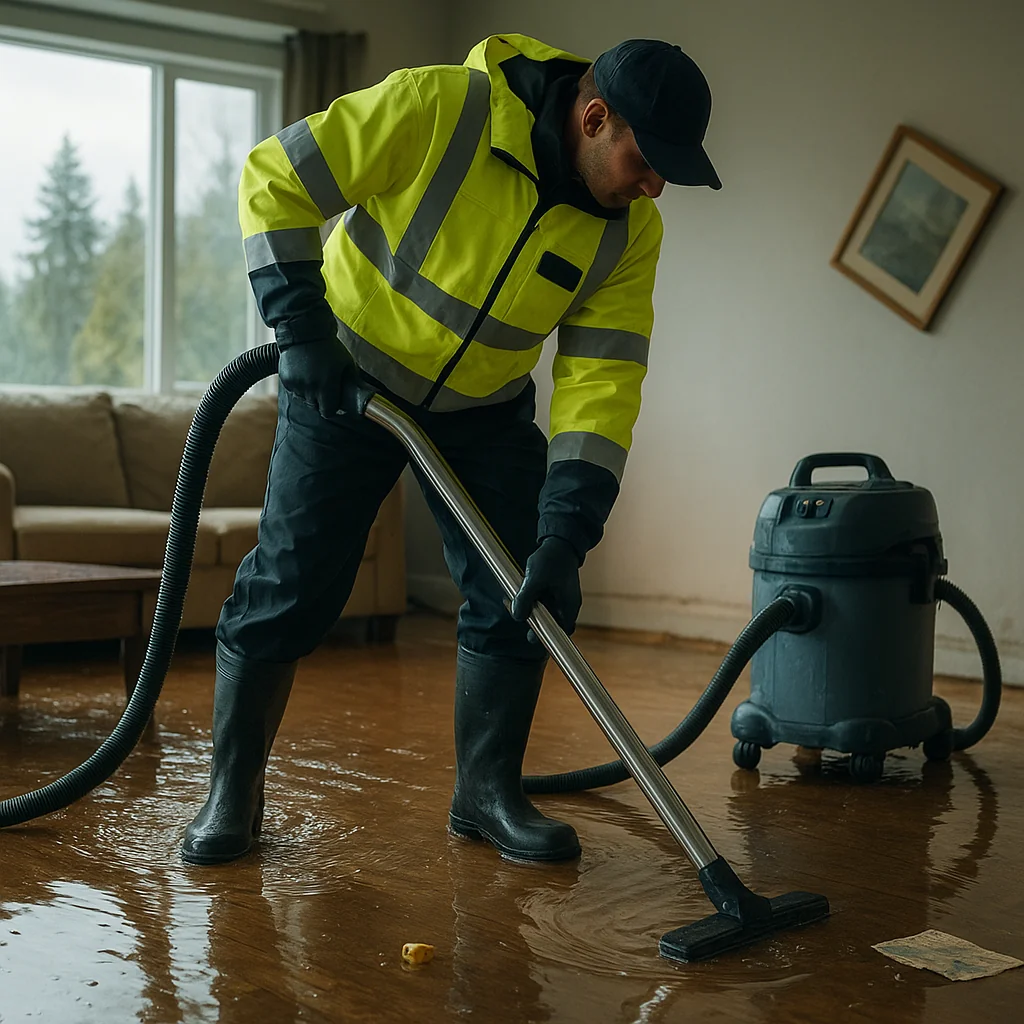
In Olympia, flood cleanup starts with rapid water extraction using high-powered truck-mount vacuums that pull out gallons per minute, often finishing standing water removal in under two hours for most homes. This immediate step stops mold growth in our perpetually damp Puget Sound air, where humidity rarely drops below 70%. Followed by targeted drying with industrial air movers and dehumidifiers, it restores safety before hidden damage spreads.
Homeowners here deal with this too often—intense winter rains from atmospheric rivers swell the Deschutes River and Capitol Lake, pushing water into basements and crawlspaces. I’ve pulled water from hundreds of these jobs, and delaying extraction by even a day lets bacteria thrive in Olympia’s soft, clay-heavy soils that hold moisture like a sponge.
Common Causes of Flooding in Olympia Homes
Olympia’s microclimate means flooding hits differently than drier areas. We get 50+ inches of rain yearly, concentrated November through March, overwhelming storm drains clogged with fir needles and leaves. Sump pump failures are huge—those 20-year-old units in 1970s ranchers quit during power outages from windstorms, letting groundwater rise fast.
River overflow from the Nisqually or Deschutes backs up into low-lying neighborhoods, especially after a king tide. Roof leaks from missing shingles during 60 mph gusts send water sheeting into attics. And don’t forget burst pipes in uninsulated crawlspaces when temps dip near freezing—frozen ground pushes pipes apart.
- Groundwater seepage: High water table after prolonged rain saturates yards, entering through foundation cracks.
- Sewer backups: Overloaded city lines during monsoons reverse flow into tubs and toilets.
- Appliance failures: Washing machines or water heaters dumping 30-50 gallons undetected.
Warning Signs of Flood Damage You Need to Spot Early
Acting on these saves thousands. Warped hardwood floors buckle within 24 hours of saturation—check for spongy feel underfoot. Musty odors signal hidden mold colonies forming in wall voids, common in our older craftsman homes with lath-and-plaster walls that trap moisture.
Stains on baseboards or bubbling paint mean capillary action is wicking water up drywall, which loses structural integrity after 48 hours submerged. Listen for sump pumps running non-stop or electrical buzzing from outlets near water—shutdown immediately to avoid shocks.
| Severity Level | Signs | Time to Act |
|---|---|---|
| Mild | Damp carpets, minor seepage | Within 12 hours |
| Moderate | Standing water <2 inches, odors | Within 6 hours |
| Severe | Deep water, electrical issues | Immediately |
In Central Olympia, Victorian-era homes show these signs fastest due to settling foundations.
What to Do Right Now: Safe First Steps for Extraction
Stay safe—turn off electricity at the breaker if water contacts outlets. Don’t wade into deep water; it conducts shocks. DIY extraction works for shallow floods under 2 inches: Rent a carpet extractor from a local hardware store, but empty the tank outside immediately to avoid sewer clogs.
- Remove excess water: Use wet/dry shop vacs on hard surfaces; avoid on carpets without pretreatment.
- Ventilate: Open windows if safe, but our winter chill slows evaporation—use fans pointed outward.
- Move valuables: Elevate furniture on blocks; Olympia’s clay soil expands when wet, heaving slabs.
- Document: Photos for insurance; note water source.
Skip bleach on surfaces—it’s useless on porous materials and creates toxic fumes. For basement flooding cleanup, pros cut drywall 18 inches up to dry cavities fully.
DIY Limits in Olympia
You can handle Category 1 clean water from a leak, but Category 2 (greywater from sewers) or 3 (blackwater) needs pros—our groundwater often carries contaminants from urban runoff.
How Pros Handle Fast Emergency Water Extraction
We arrive with a truck-mounted extractor pumping 100 gallons per minute through 2-inch hoses, sucking water from carpets, walls, and subfloors simultaneously. Moisture meters probe for hidden saturation—anything over 17% gets hit with 500 CFM air movers and desiccant dehumidifiers pulling 100 pints daily.
Thermal imaging cameras spot cold, wet spots behind tile or in attics. We inject walls with antimicrobial solutions, then set up containment to isolate drying zones. Full jobs take 3-5 days: Day 1 extraction, Days 2-4 drying to under 12% moisture, Day 5 inspection and rebuild prep.
In SW Olympia, near Budd Inlet, we prioritize tidal influences that prolong drying.
Olympia’s Unique Flood Challenges and Local Context
Our silty loam soils drain poorly, holding water 2-3 times longer than sandy areas. Aging housing stock—many 1950s homes lack vapor barriers in crawls—amplifies issues. Winter storms bring 4-6 inches rain in 48 hours, exceeding 90% of drain capacities.
Proximity to waterways means brackish intrusion, corroding rebar in slabs faster. Power flickers from overhead lines delay sump operation. In NE Olympia, hillsides erode, sending mud into streets and homes.
Prevention Strategies Tailored for Olympia Homeowners
Install backwater valves on sewers—mandatory in some flood zones now. Extend downspouts 10 feet from foundations; our rains hit roofs hard. Battery backups for sumps handle 8-12 hour outages.
- Grade yards: 6-inch slope away from house; regrade every 5 years as soil settles.
- Seal cracks: Hydraulic cement for foundations; silicone for windows.
- Annual inspections: Check gutters pre-winter; clean leaf debris monthly October-March.
- Smart sensors: WiFi water alarms notify your phone instantly.
Insulate pipes and add heat tape for freezes. For crawlspaces, encapsulate with 20-mil vapor barrier and vent fans.
When to Call a Pro for Flood Cleanup in Olympia
Call if water exceeds 2 inches, involves sewage, or electrical hazards—DIY risks health and structural fails. After storms, pros assess for insurance-covered mold remediation. Olympia Storm Cleanup Pros specializes in NW Olympia storm damage too. Reach us at (360) 299-5978 for rapid response; we’ve handled these exact scenarios countless times.
Leave a Reply