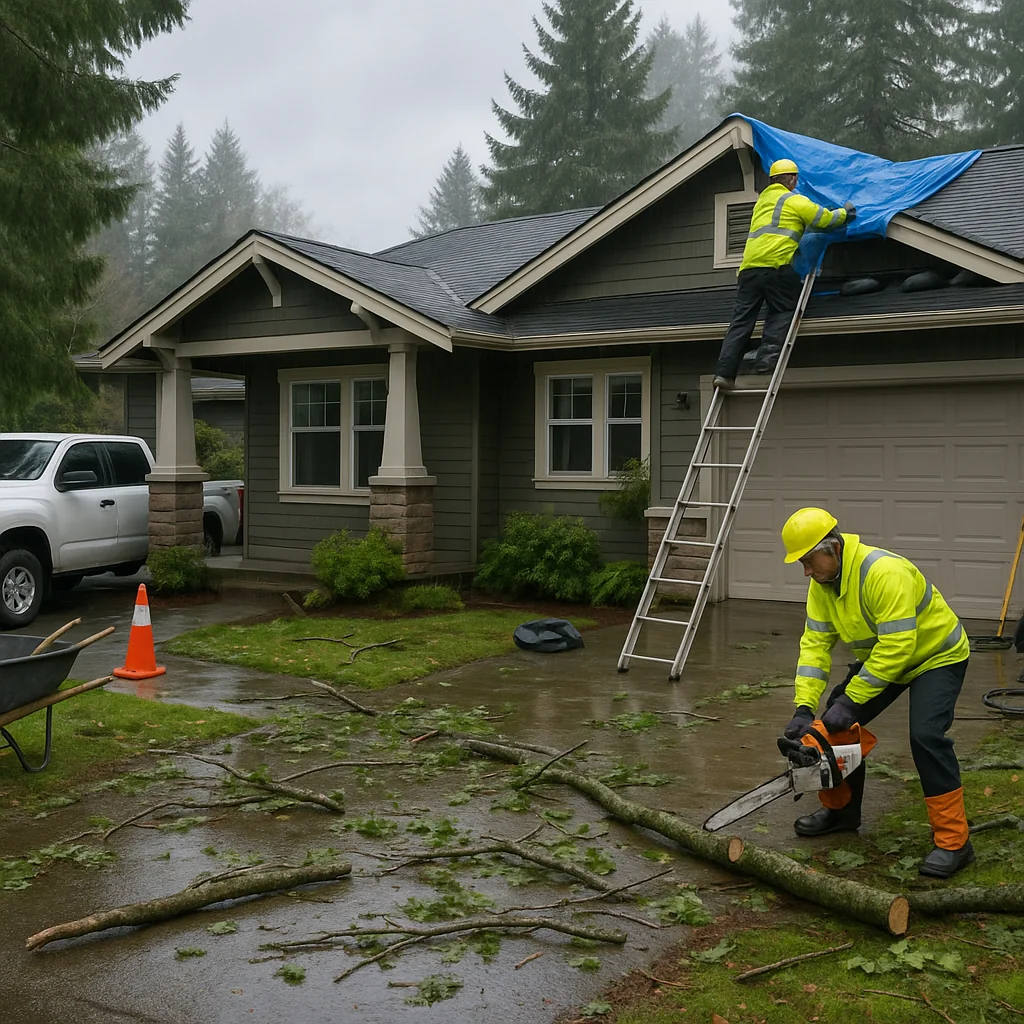
After a windstorm or heavy rain in Olympia, start storm damage cleanup by shutting off power and gas to avoid hazards, then document all damage with photos before touching anything. Here are the top 10 storm damage cleanup tips for Olympia WA homeowners: 1) Prioritize safety, 2) Assess and document, 3) Wear protective gear, 4) Remove standing water fast, 5) Secure the roof with tarps, 6) Dry interiors within 48 hours, 7) Clear debris carefully, 8) Check for structural issues, 9) Clean and disinfect, 10) Trim overhanging branches. Olympia’s saturated soils and frequent November-March downpours make these steps critical to prevent mold and further collapse.
I’ve been on hundreds of storm cleanup jobs around Olympia, from Central Olympia to the south end, and homeowners who act fast on these basics save thousands in repairs. Our marine climate means wind-driven rain soaks everything quickly, turning minor leaks into major problems in older homes built before modern codes.
Common Causes of Storm Damage in Olympia
Olympia’s position near Puget Sound brings gale-force winds up to 60 mph during winter storms, snapping branches onto roofs and siding. Heavy rains—often 5-10 inches in a week—saturate the clay-heavy soils here, causing trees to uproot and basements to flood, especially in South Olympia where drainage is poor. Aging housing stock from the 1960s-80s lacks the wind bracing of newer builds, so shakes and asphalt roofs lift easily.
Warning Signs You Can’t Ignore
Look for sagging ceilings from water weight—I’ve cut into dozens where joists were rotting through. Warped doors or sticking windows signal frame damage. Outside, check for leaning fences or soil pushed against foundations; in SE Olympia neighborhoods, this often leads to cracked slabs after saturation. Use this table to gauge severity:
| Sign | Severity | Action |
|---|---|---|
| Slight water stains | Low | Dry and monitor |
| Sagging roof edges | Medium | Tarp immediately |
| Visible mold or buckling floors | High | Call pros now |
If you spot black streaks on walls inside 48 hours, that’s active mold growth from our humid air.
What to Do Right Now: Step-by-Step Immediate Response
Turn off electricity at the breaker if water’s near outlets—standing in puddles with live wires is how accidents happen. Ventilate by opening windows if safe, but only after power’s off. For flooding, start with flood water extraction using a wet vac; don’t wait for it to evaporate, as Olympia’s 80% humidity slows that to a crawl.
Top 10 Storm Damage Cleanup Tips in Detail
- Prioritize safety: Walk the property perimeter first, avoiding downed lines. Shut off gas if you smell it—Olympia Fire Department sees spikes in leaks post-storm.
- Assess and document: Use your phone for timestamped photos from multiple angles. Insurance adjusters here reject claims without this.
- Wear PPE: Gloves, boots, N95 mask—sewage mixes in with Capitol Lake overflow floods common downtown.
- Remove standing water: Shop vac or buckets; aim to extract 90% within hours to hit the mold prevention window.
- Secure the roof: Nail plywood or buy 10×12 tarps from local hardware. Winds rip cheap plastic sheeting.
- Dry interiors fast: Fans and dehumidifiers on high; box fans in windows pull moist air out. In our climate, skip natural drying.
- Clear debris carefully: Chain saw only if experienced—falling limbs kill more than storms do. Haul limbs under 4 inches yourself; larger needs pros.
- Check structure: Tap walls for hollow sounds indicating water damage. Probe soft spots with a screwdriver.
- Clean and disinfect: Bleach solution (1 cup per gallon water) on non-porous surfaces. Porous stuff like drywall goes if wet over 24 hours.
- Trim threats: Cut branches over 50% canopy weight now; arborists handle big jobs before next blow.
DIY these if damage is minor, like a few shingles, but anything structural waits for experts—we use moisture meters to verify dryness levels under 15%.
How Pros Handle Olympia Storm Cleanup
On-site, we start with aerial drone scans for roof holes you can’t see from ground. Industrial extractors pull 100 gallons per minute, unlike home vacs. For emergency storm damage cleanup, air movers hit 500 CFM to dry cavities behind walls. In SE Olympia, where soils shift, we brace foundations temporarily. Antimicrobial treatments stop hidden mold spores.
Olympia-Specific Challenges and Prevention
Our wet winters mean prevention starts with gutters: clean twice yearly, as leaf-clogged ones backfeed under shakes. Install French drains if your lot slopes toward the house—common fix in low-lying areas. Evergreen-heavy yards need pruning; Douglas firs drop needles that mat and hold water. Retrofit older roofs with hurricane clips; permits are straightforward via Thurston County. Monitor NOAA for atmospheric rivers—they dump 4 inches overnight here.
When to Call a Pro in Olympia
Skip DIY if water’s touched electrical, mold appears, or roof’s compromised—pros mitigate liability too. For Olympia Storm Cleanup Pros handling Storm Damage Cleanup in Olympia, reach us at (360) 299-5978 anytime. We’ve stabilized homes from Lacey to Tumwater post-storm, getting folks back safe.
Leave a Reply