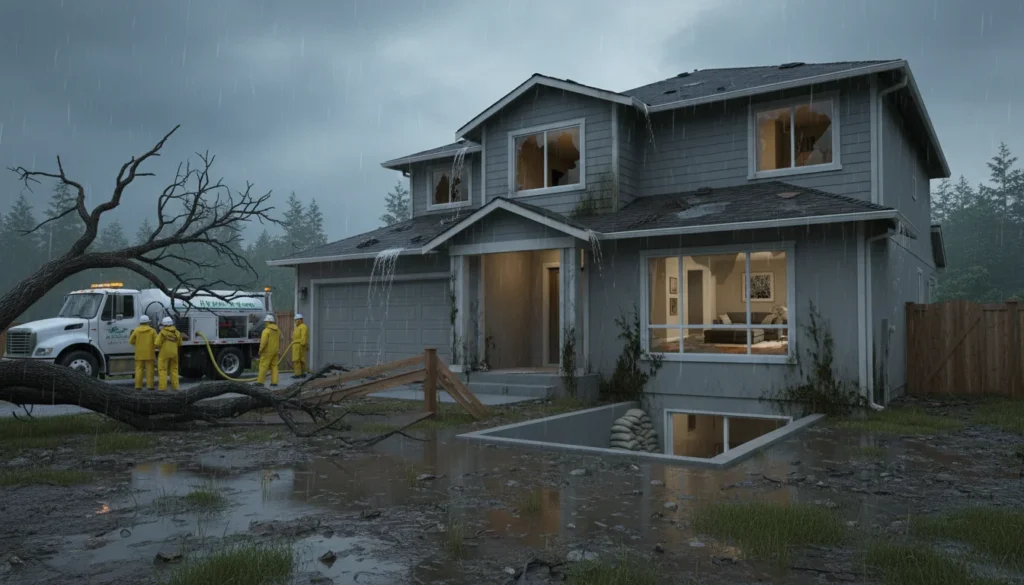
Olympia’s heavy rains, often dumping 5-10 inches in a single November storm, seep into homes through compromised roofs, siding, and foundations, leading to long-term water damage like mold growth and structural rot that doesn’t show up for months. This happens because our saturated Puget Sound soils push groundwater up against basements, while wind-driven rain exploits gaps in older Olympia homes built before modern sealing standards. Left unchecked, it weakens framing and invites costly repairs down the line.
For Olympia homeowners, this isn’t just a winter nuisance—it’s a silent threat that turns cozy Craftsman bungalows in Central Olympia or ranch styles in SW Olympia into headache factories. I’ve pulled apart enough soggy walls here to know: ignoring it means replacing not just drywall, but joists and insulation too.
How Heavy Rains Penetrate Olympia Homes
Rain in Olympia doesn’t just fall; it hammers sideways with 30-50 mph gusts common in our atmospheric rivers. That forces water past weathered asphalt shingles on roofs averaging 25 years old in neighborhoods like NW Olympia. Cracks in flashing around chimneys—I’ve found them rusted through after 10 seasons—let it drip into attics, soaking cellulose insulation until it compresses and loses R-value.
Foundations take a beating from our clay-heavy glacial soils, which swell when wet and hold moisture like a sponge. During El Niño winters with 60+ inches total rain, hydrostatic pressure builds, cracking concrete slabs poured in the ’70s without vapor barriers. Siding on wood-frame homes gaps at joints, and windblown rain wicked up behind vinyl pulls it away from sheathing.
Key Intrusion Points
- Roof valleys and vents: Debris-clogged, allowing ponding.
- Window frames: Caulking fails after 5-7 years of UV and freeze-thaw.
- Crawlspaces: Unvented ones flood first, rotting floor joists.
Warning Signs of Brewing Long-Term Damage
Don’t wait for visible puddles. Early clues I’ve spotted hundreds of times: musty odors from HVAC pulling damp air, or paint bubbling on north-facing walls where rain lingers. Warped hardwood floors in living rooms signal subfloor saturation—lift a corner, and you’ll see dark stains migrating 6-12 inches out.
Check attics for dark streaks on rafters or insulation matted flat. Basements show efflorescence—white powdery salt deposits—as concrete leaches minerals from trapped water. By the time you see mold colonies (black spots thriving at 70%+ humidity), it’s already compromised 2x4s, needing replacement.
| Sign | Severity | Timeline to Act |
|---|---|---|
| Bubbling paint | Low | 1-2 weeks |
| Soft drywall edges | Medium | 48 hours |
| Sagging ceilings | High | Immediate |
| Mold smell | High | 24 hours |
Immediate Steps You Can Take
First, kill power to wet areas—flip breakers, not just unplug. Tarps over roof leaks work short-term; I’ve draped dozens over valleys in SE Olympia homes before full patches. Set up box fans for airflow, but skip shop vacs on porous materials—they spread contaminants.
For crawlspaces, a dehumidifier pulls 50-70 pints daily, but only if you seal vents first. DIY drywall cuts? Fine for surface stuff under 10 sq ft with a multi-tool, but wear N95 and bag waste sealed. Honest talk: if water’s hit studs or you’ve got standing water, stop—pros have the gear to avoid health risks.
- Document damage with photos for insurance.
- Mop up surface water with towels.
- Prop doors open for cross-breeze.
How Pros Handle Olympia Water Damage
We start with flood water extraction using truck-mounted pumps sucking 100 gallons/minute, faster than any homeowner rig. Moisture meters probe walls (readings over 17% mean demo), and thermal cams spot hidden wet behind tile.
Air movers (20+ per job) create 500 CFM evaporation, paired with commercial dehus at 100 pints/hour. Then antimicrobial sprays hit mold spores. Structural drying takes 3-5 days; we cut drywall 18″ up, remove wet insulation, and pack out cavities with fans. Roofers sister rafters if rotted—common on Olympia’s shake roofs.
Post-dry, we rebuild with moisture-resistant greenboard and exterior-grade sealants tuned for our rainy climate.
Olympia’s Local Factors Amplifying Damage
Our 52-inch annual rainfall peaks October-March, with soils slow to drain due to underlying Vashon till. Older homes (40% pre-1980) lack housewrap, so rain sheets down unpainted cedar siding into rim joists. Proximity to Capitol Lake or Budd Inlet means higher water tables in low spots, pushing sump pumps overtime.
Winter winds from the Sound drive rain horizontal, hitting eaves hard. Combine with leaf drop clogging gutters—I’ve cleared 50 lbs from one downspout—and you’ve got overflow soaking fascia boards.
Neighborhood Nuances
- Eastside: Steeper slopes direct runoff to foundations.
- Westside: Wetter microclimate, more basement issues.
- Downtown: Urban drainage overwhelms older sewers.
Prevention Tailored to Olympia Winters
Extend downspouts 5-10 ft from house, buried in gravel trenches—cuts foundation splashback 80%. Gutter guards? Skip cheap plastic; stainless mesh lasts here. Roof maintenance: inspect flashing yearly, replace valley metal every 15 years.
Seal crawlspaces with vapor barriers (6-mil poly) and rigid foam board—drops moisture 30%. French drains around perimeters handle our groundwater spikes. Trim trees away from roofs; fir branches hold needles that acidify runoff, eating at asphalt.
For windows, silicone caulk over backer rod every 3 years. Insulate attics to prevent ice dams, rare but brutal in our mild colds.
When to Call Olympia Storm Cleanup Pros
If you’ve got more than a bucket of water, sagging anything, or that telltale musty whiff persisting after fans, it’s pro time. We specialize in Storm Damage Cleanup in Olympia, from extraction to rebuild, saving you thousands in hidden fixes. Reach out at (360) 299-5978—no obligation chat about your situation.
Leave a Reply