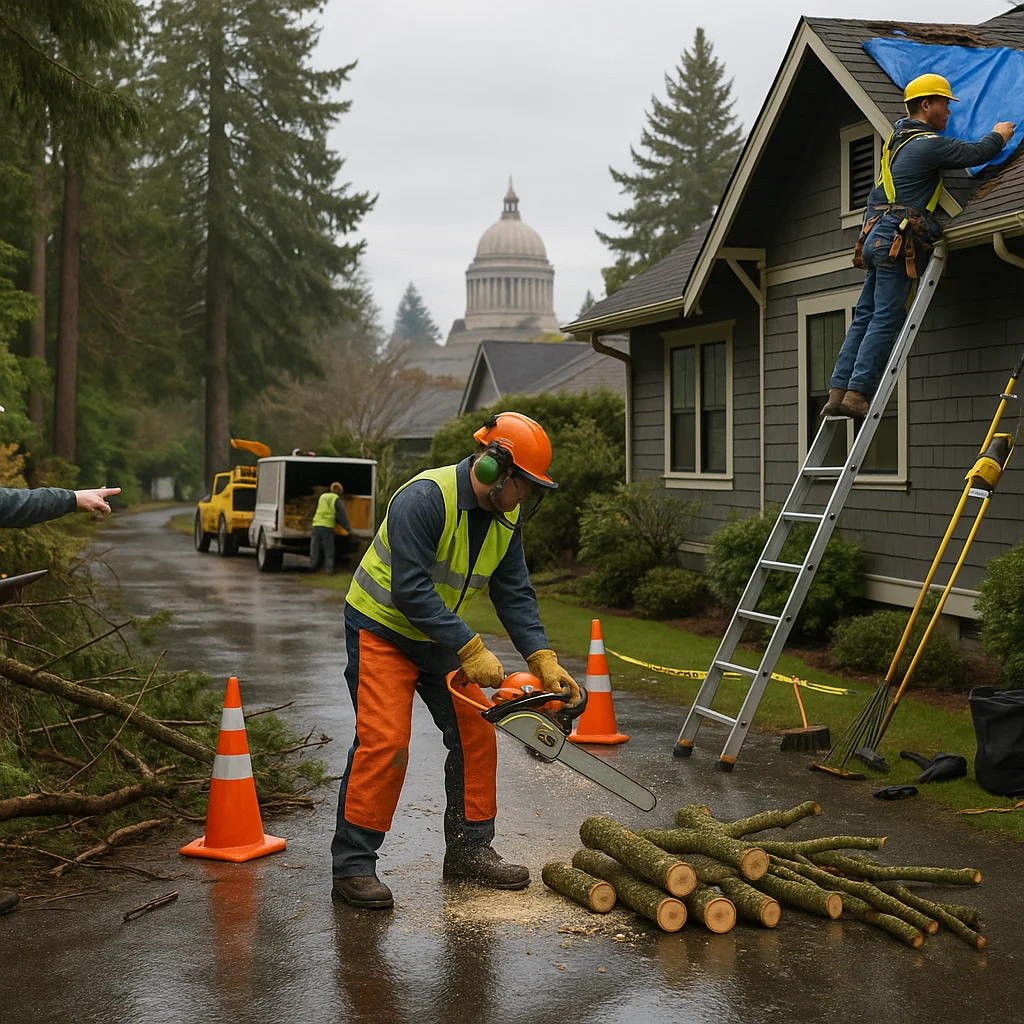
Wind damage cleanup in Olympia starts with securing the property and assessing structural safety, then tarping exposed areas to prevent water intrusion from our frequent rains, followed by debris removal, drying, and professional repairs. In Olympia, where gusts over 50 mph hit during winter storms from the Pacific, this process protects older homes with shake roofs common in neighborhoods like Central Olympia. Skipping steps risks mold in our damp climate.
Olympia homeowners deal with wind damage more than you’d think—those South Sound gales strip branches, lift shingles, and down power lines every fall and winter. Getting the cleanup right keeps your home safe and insurance claims smooth. I’ve walked hundreds of sites here, from wood-shingled Victorians in NE Olympia to modern builds in NW areas battered by saltwater winds.
Common Causes of Wind Damage in Olympia Homes
Our location between the Puget Sound and Olympics funnels strong winds, often 40-60 mph sustained with gusts to 70 during atmospheric rivers. Tall Douglas firs and bigleaf maples, mature from decades without much pruning, snap or uproot in saturated soil—Olympia’s clay-heavy ground holds water, weakening roots after 10+ inches of rain in a month.
Roofs take the brunt: asphalt shingles curl from constant moisture, while cedar shakes, popular on 1970s-80s homes, splinter easily. Windows crack from flying debris like fence sections or patio furniture. And don’t forget siding—wind-driven rain penetrates vinyl seams, leading to rot behind.
- Tree fall: 60% of calls I get involve trees or limbs on roofs.
- Roof lifts: Negative pressure from wind sucks up edges.
- Debris impact: Everything loose becomes a projectile.
Warning Signs That Demand Immediate Attention
Look for sagging roofs—that’s often sheathing compromised under missing shingles. Water stains inside mean leaks; in Olympia, even small gaps fill with rain fast. Cracked windows or doors that won’t latch signal frame twists.
Outside, piles of granules in gutters show shingle wear. Leaning trees with exposed roots or soil mounding at the base scream instability. Power flickering? Downed lines mean stay out.
| Sign | Severity | Action |
|---|---|---|
| Sagging roofline | High | Evacuate, call pro |
| Water stains | Medium | Tarp, dry out |
| Loose branches | Low | Prune safely |
| Granule buildup | Low-Medium | Inspect shingles |
What to Do Right Now After a Wind Storm
First, safety: don’t enter if power lines are down or structure looks unstable—wait for pros. Document everything with photos for insurance: wide shots of damage, close-ups of breaks.
- Secure the site: Board windows with plywood (1/2-inch minimum), brace doors.
- Tarp roofs: Use 6-mil poly sheeting, nail every 6 inches along edges. In Olympia rain, this buys 48-72 hours.
- Remove hazards: Drag branches away from house if safe; cut nothing touching wires.
- Check utilities: Shut off water if pipes shifted; power if safe.
- Dry interior: Fans and dehumidifiers for minor leaks—DIY ok here, but watch for black mold in wet wood.
DIY small debris if you’re handy, but anything over 20 feet up or structural? Stop. Falls kill more than storms here.
How Pros Handle Wind Damage Cleanup Step-by-Step
We arrive geared: chainsaws, tarps, moisture meters, air movers. Step 1: Full assessment—drone for roofs if high, infrared cams for hidden leaks. Mark hazards.
Step 2: Debris removal—chain limbs off roofs first, bucket truck for heights. Grind stumps later to prevent regrowth.
Step 3: Temporary protection—pro tarps with heat-welded seams last weeks in wind. Board with steel if needed.
Step 4: Water mitigation. Olympia’s humidity means we set up containment, extract standing water, then industrial dehus for subfloors. If wind exposed pipes, it ties into burst pipe water damage protocols.
Step 5: Structural repairs—replace sheathing (OSB swells here, use CDX plywood), re-shingle matching codes (Olympia requires Class A fire-rated).
Step 6: Sanitize and rebuild. EPA-registered antimicrobials for mold spores, then drywall, paint. Full process: 3-14 days depending on size.
For urgent cases, our emergency storm damage cleanup gets skin in 2 hours.
Olympia’s Unique Challenges in Wind Damage Cleanup
Our marine climate—50+ inches rain yearly—turns wind damage into water fests quick. Roofs leak, saturated soil shifts foundations on slopes in NE Olympia. Older homes (pre-1980) have unbraced rafters that flex.
Winter timing: storms hit Dec-Feb, delaying crews with ice or floods. Salt air corrodes nails faster, so we use galvanized or stainless. Evergreen debris molds fast—pine needles clog gutters, worsening runoff.
In NW Olympia, waterfront gusts strip siding; we see rot behind vinyl weekly.
Prevention Strategies Tailored for Olympia
Trim trees annually—hire ISA certified arborists for co-dominant leaders in firs. Roof inspections pre-winter: clean gutters (4x/year here), secure flashings.
Upgrade: Impact-resistant shingles (Class 4), metal roofs for longevity. Brace chimneys—wind twists them off. Install wind-rated garage doors.
- Plant low-branches species away from house.
- Anchor AC units, satellite dishes.
- Insurance rider for wind deductibles (often 1-2% here).
Small investments beat $20k repairs.
When to Call a Pro for Wind Damage in Olympia
DIY tarps and small branches if accessible. Call if roof penetrated, tree on structure, or water inside—mold sets in 24-48 hours our humidity. Olympia Storm Cleanup Pros knows local codes, insurers like Allstate common here. Reach us at (360) 299-5978 for fast response—no subcontractors, all local crew.
Leave a Reply