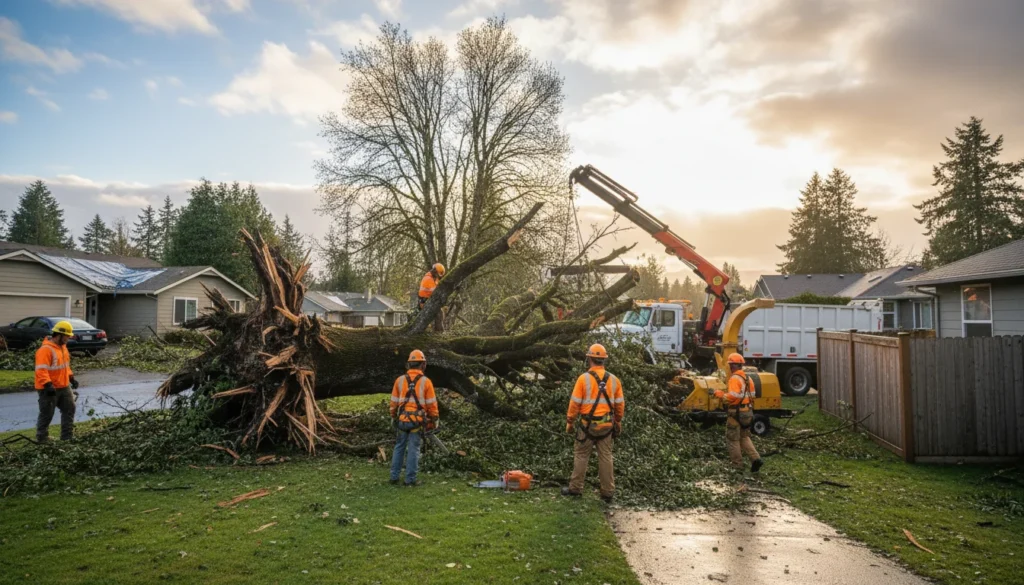
After a storm hits Olympia, downed or damaged trees pose immediate risks like hitting power lines or your home, so calling local professionals right away prevents further damage and injury. Our soggy soil here loosens roots fast, making even standing trees unstable. Olympia Storm Cleanup Pros handles this daily, ensuring safe removal without turning a bad situation worse.
Storms roll through Olympia regularly, especially in fall and winter with wind gusts over 50 mph and heavy rain saturating the ground. Homeowners in neighborhoods like Central Olympia see big firs and madrones snap or uproot, blocking driveways or threatening roofs. Ignoring these isn’t an option—poor handling leads to more costly repairs down the line.
Common Causes of Tree Damage During Olympia Storms
Olympia’s maritime climate means wet winters weaken trees year-round. Shallow-rooted species like maples struggle in our clay-heavy soils that hold water, causing roots to rot over time. When 40-60 mph winds hit—as they did in the 2021 bomb cyclone—trees with compromised roots pull right out.
Overloaded branches from constant rain and moss buildup snap under wind shear. Older homes in SW Olympia often have mature trees planted too close to foundations, amplifying damage when they fall. Ice storms, rare but brutal, add weight that bends trunks beyond recovery.
Key Factors in Our Area
- Saturated soils reduce anchorage by up to 50% after 48 hours of rain.
- Wind from the south funnels through Capitol Lake, hitting trees harder.
- Disease like root rot from Phytophthora in wet areas weakens trees pre-storm.
Warning Signs Your Tree Needs Professional Removal
Don’t wait for it to fall—look for these red flags post-storm. A tree leaning more than 15 degrees toward your house or power lines screams instability. Cracks in the trunk wider than a finger, or bark stripping exposing wood, mean structural failure.
Listen for creaking in wind; roots heaving soil more than 6 inches high indicate uplift. Mushrooms at the base signal internal rot. In Olympia’s humid air, these issues escalate fast after storms.
| Sign | Severity | Action |
|---|---|---|
| Leaning >15° | High | Evacuate area, call pro |
| Cracked trunk | Medium-High | Inspect roots |
| Mushrooms/rot | Medium | Monitor, prune if small |
| Minor branch snap | Low | DIY trim if safe |
What to Do Immediately After a Storm
Stay safe first: avoid downed trees near wires—contact Puget Sound Energy immediately. Clear small debris from gutters to prevent water backup, but skip chainsaws unless you’re certified. Document damage with photos for insurance before touching anything.
- Secure your property: board windows if winds persist.
- Check neighbors—shared trees often cross lot lines.
- Avoid walking under hanging limbs; they can drop unexpectedly.
For urgent cleanup, pros offer emergency storm damage cleanup, arriving within hours to stabilize hazards.
Why DIY Tree Removal Often Backfires
You might trim small branches with loppers, but anything over 2 inches diameter requires gear and know-how. Chainsaw kickback injures amateurs yearly; our local ER sees it post-storm. Ropes and wedges are musts for controlled felling, but wrong angles send trees into fences or roofs.
In Olympia’s sloped yards, especially in SE Olympia, uneven ground makes DIY fells unpredictable. Fines for hitting utilities add up quick—pros verify lines first.
How Professionals Handle Storm-Damaged Trees
We start with a site assessment: drone scans for overhead risks, ground taps to check rot hollowness. Rigging systems lower sections piecemeal over houses, using port-a-wraps and bull ropes rated 20,000 lbs.
Cut in 18-24 inch logs for easy haul-off; stump grinding follows to 12 inches below grade, preventing regrowth. Chip branches on-site for mulch, or haul to transfer stations. Full cleanup includes tarping exposed roofs from basement flooding cleanup risks if roots puncture lines.
Insurance paperwork? We photo everything, provide detailed reports matching adjuster checklists.
Olympia’s Unique Storm Tree Challenges
Our 50+ inches annual rain keeps soils spongy; post-storm, trees in glacial till slide downhill. Older neighborhoods near Budd Inlet have saltwater-stressed pines that brittle-snap. Fall gales coincide with leaf-drop, unbalancing bigleaf maples.
Winter freezes into spring thaws heave frozen roots. Proximity to I-5 means debris flies farther. Homes built 1950s-70s have trees now 80 feet tall, outpacing mature size for lots.
Prevention Strategies for Long-Term Safety
Plant natives like Douglas fir with deep roots suited to wet soils. Prune annually before November winds—remove co-dominant leaders. Mulch 3 inches deep, no closer than 6 inches to trunk, to retain moisture without rot.
Soil tests every 5 years catch nutrient issues; cabling for split crotches costs $300-800 but saves thousands. Thin canopy 20-30% to reduce wind sail effect. Homeowners associations in Central often subsidize these.
When to Call Olympia Storm Cleanup Pros
Grab your phone for any tree over 20 feet, leaning hazards, or property contact. We’re equipped for Olympia’s tight lots and weather. Dial (360) 299-5978 for fast response—we’ve cleared hundreds post-local storms, keeping your home safe through cleanup to restoration.
Leave a Reply