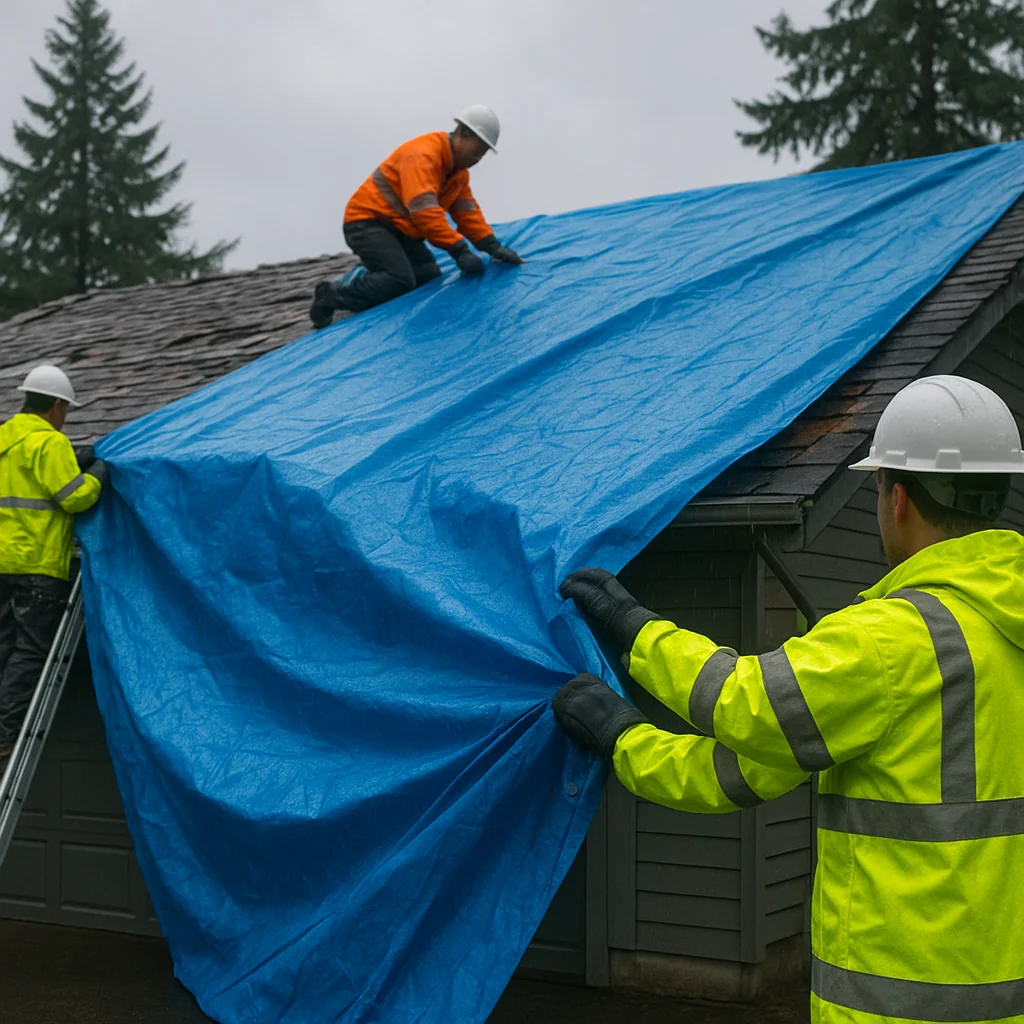
If your roof in Olympia takes a hit from high winds or falling branches during one of our winter storms, you need emergency tarping right away to stop rainwater from pouring into your attic or ceilings. This is crucial here because our relentless Puget Sound rains—often 40 inches or more a year—turn small roof breaches into major interior floods within hours. Tarping seals the damage temporarily, buying you days or weeks for full repairs without mold starting or structures weakening.
Olympia homeowners face this more than most because our steep roofs on older craftsman-style houses shed water fast, but wind gusts over 50 mph from November through February rip off shingles or puncture holes, especially on south-facing slopes exposed to southerly storms.
Common Causes of Roof Damage Needing Tarps in Olympia
Storms here don’t mess around. High winds from the south and east barrel through the Capitol Lake area, peeling back asphalt shingles that are already brittle after 20 years of UV and moisture cycles. Fallen Douglas fir branches from nearby wooded lots or the Capitol Forest are another killer—we see them punching clean through roofs weekly during big events like the 2021 windstorm.
Heavy wet snow, though rare, packs onto roofs and slides off in slabs, tearing valleys. And don’t forget hail from those summer microbursts; even pea-sized pellets dent shingles enough to crack granules, letting water seep under. In Central Olympia, where homes cluster tight, debris from neighbor’s trees adds risk.
Warning Signs Your Roof Needs Immediate Tarping
Spot these fast, or your sheetrock turns to mush. Water dripping from ceiling lights or vents is the obvious one, but look for darker stains spreading outward on attic insulation— that’s capillary action pulling moisture sideways. Sagging ceilings mean rafters are soaking; if it’s over 6 inches down, evacuate that room.
Granule buildup in gutters signals shingle loss upstream. On the roof, flapping edges or bare plywood patches scream tarp time. Use this table to gauge urgency:
| Sign | Severity | Action |
|---|---|---|
| Small water spots | Low | Monitor, DIY tarp if safe |
| Active leaks, sagging | Medium | Tarp ASAP, call pro |
| Ponded water in attic | High | Evacuate, pro tarp now |
| Visible hole >1 sq ft | Critical | Secure perimeter, pro only |
In Olympia’s damp air, even minor signs escalate because 100% humidity indoors from leaks feeds mold in 48 hours.
What to Do Right Now After an Olympia Storm
- Safety first: Stay off the roof if winds exceed 20 mph or it’s wet—slips kill more than leaks. Use binoculars from the ground.
- Inspect exterior: Walk your perimeter for downed limbs on roofline. Probe soft spots with a broom from a ladder, but ladder under 10 feet max if solo.
- Protect interior: Move furniture, bucket leaks, run fans to vent moist air outside.
- DIY tarp small holes (<10 sq ft): Buy UV-resistant poly sheeting (10×12 minimum), 2×4 battens, nails. Drape over damage, nail battens every 2 feet, overlap edges 18 inches. Lasts 2-4 weeks in our rain.
- Document everything with photos for insurance—Olympia adjusters need proof.
DIY works for tiny fixes on single-story homes like many in SW Olympia, but skip if over 20 feet up or multi-story.
How Pros Handle Emergency Tarping On-Site
We roll up in a truck with pre-cut tarps (20×30 for most homes), extension ladders rated 375 lbs, and pneumatic nailers. First, clear debris without walking the roof—use roof brackets or drones for assessment. Then, heat-weld seams if needed for watertight seal, secure with 1×4 furring strips screwed through into rafters every 24 inches.
We flare edges over drip lines and add chimney collars. Full job: 1-2 hours for standard rancher, includes attic ventilation check to dry existing dampness. Ties into emergency storm damage cleanup if water’s already inside. Cost? $300-800 depending on span, far less than $10k water damage.
Olympia’s Climate and Housing Make Tarping Essential
Our marine climate dumps rain sideways under eaves, so un-tarped roofs in SE Olympia flood crawlspaces via downspouts. Older homes (1960s-80s boom) have composition shingles that curl from freeze-thaw, and clay-heavy soils shift foundations, stressing roof decks. Winter winds peak in January, aligning with king tides that flood basements if roofs fail first.
Summer fires send ash that clogs valleys, but it’s the November “bomb cyclones” that shred exposed ridges. Local code requires 30-lb felt underlay, but many pre-2000 homes skimp, worsening leaks.
Prevention Strategies for Olympia Roofs
- Trim trees annually—keep branches 10+ feet from eaves.
- Inspect post-storm and pre-winter: Clean gutters, replace missing granules.
- Upgrade to impact-rated shingles if hailing prone.
- Install ridge vents; poor attic airflow traps our humid air.
- Consider metal roofs long-term—they shrug off branches.
These cut tarp needs by half in our calls.
When to Call Olympia Pros for Tarping
Skip DIY if roof pitch over 6/12, height above 15 feet, or any electrical near leaks. Pros ensure insurance-compliant installs that hold in 60 mph gusts. For burst pipe water damage combined with roof issues, we coordinate. Reach out via (360) 299-5978 if unsure—better safe than soaked.
Leave a Reply