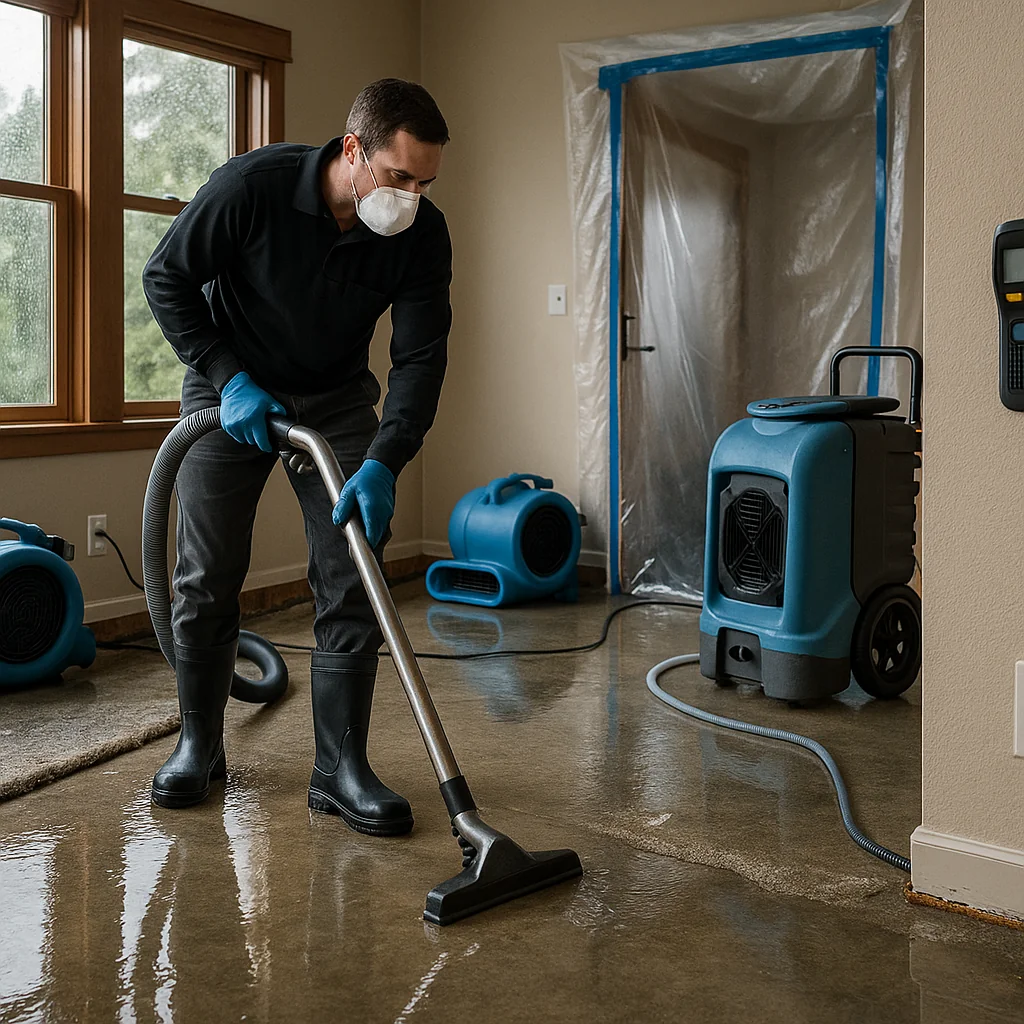
In Olympia, where winter rains and king tides push the South Sound’s water levels up, the first step in flood damage restoration is to shut off electricity and water, then remove standing water with a wet vac or pump if it’s clean. Prioritize safety by wearing protective gear, and document everything for insurance before extracting as much water as possible within the first hour. Delaying lets mold start growing in our humid climate.
Flooding hits Olympia homes hard because of our soggy soil, high groundwater, and older crawlspace foundations common in neighborhoods like those near Capitol Lake. I’ve pulled gallons of muddy water from basements here hundreds of times, and ignoring it leads to warped floors, rotted joists, and health risks from hidden mold. These tips come from on-site experience helping locals recover fast.
Common Causes of Flooding in Olympia Homes
Our location on the Puget Sound means heavy saturation from November through March, with 5-10 inches of rain per storm event soaking the ground. Low-lying areas around Budd Inlet see groundwater rising through slabs, especially in homes built before the 1980s with shallow foundations. Roof drains clogged by fallen leaves from our bigleaf maples overflow into gutters, sending water straight to interiors.
- Sump pump failure: Power outages during storms kill these, backing up 200-500 gallons overnight.
- Sewer backups: City lines overload in SW Olympia, pushing sewage into tubs and floors.
- Flash flooding: Steep hills in NE neighborhoods dump runoff into streets, seeping under doors.
Tree roots invading drain tiles exacerbate this in clay-heavy soils that don’t drain well.
Warning Signs of Hidden Flood Damage
You might not see puddles, but damp carpets smell musty within 24 hours, and baseboards pull away from walls as drywall swells. Listen for squishing underfoot or bubbling paint—common after our tidal surges. Buckling hardwood in living rooms signals subfloor saturation.
| Severity Level | Signs | Time to Act |
|---|---|---|
| Low | Damp spots, minor warping | 24 hours |
| Medium | Musty odors, soft drywall | 12 hours |
| High | Standing water, electrical issues | Immediately |
In Olympia’s cool, damp air, these worsen fast—I’ve cut out black mold patches that started as tiny spots behind furniture.
What to Do Right Now After a Flood
Stay out if water’s over ankle-deep or near electrical panels. Turn off breakers at the main if safe, and avoid using outlets. For clean water under 2 inches, rent a shop vac to suck it up, then move furniture to dry areas.
- Wear rubber boots, gloves, goggles—sewage floods carry bacteria.
- Remove wet rugs and pads; they hold 2-3 times their weight in water.
- Open windows if temps are above 50°F, but use fans pointing outward.
- Mop hard surfaces with 1 cup bleach per gallon water, but only after power’s off.
Don’t DIY if it’s graywater from washing machines or blackwater from sewers—call for that. In NW Olympia, where basements are prone, pros extract faster than homeowners can.
How Professionals Handle Flood Damage Restoration
We arrive with truck-mounted extractors pulling 100-150 gallons per minute, far beyond shop vacs. Moisture meters probe walls up to 4 inches deep, reading psychrometric charts to balance dehumidifiers and air movers—typically 40-60 units per 1,000 sq ft.
Steps on-site:
- Assessment: Categorize water (1 clean, 2 gray, 3 black) and scope structural damage.
- Extraction: Truck pumps out bulk, wands for carpets.
- Drying: 3-5 days monitoring to under 15% moisture, preventing cupping in fir floors common here.
- Disinfection: EPA-approved antimicrobials fogged into voids.
- Rebuild: Replace subfloors, insulate properly.
For basement flooding cleanup, we use injectidry systems to push air under slabs.
Olympia’s Unique Flood Challenges
Our water table sits just 5-10 feet below ground in many spots, rising with tides and rains. Homes in NE Olympia on hills deal with runoff, while waterfront properties fight brackish intrusion corroding pipes. Older ranch-style houses with vented crawlspaces trap moisture, breeding mold in fir framing.
Winter freezes rare but brutal—water expands 9% freezing joists. Summer droughts crack foundations, inviting later leaks. Local codes require vapor barriers now, but retrofits lag.
Prevention Tips for Olympia Homeowners
Install backwater valves on sewers for $500-1,000—pays off in one event. Extend downspouts 5-10 feet from foundations, and grade soil 6 inches drop over 10 feet. Clean gutters twice yearly before leaf drop.
Year-round checks:
- Test sump pumps monthly; have battery backups.
- Seal crawlspace vents October-March.
- Waterproof basements with interior drains tied to pumps.
For emergency storm damage cleanup, prep by elevating appliances and knowing your shutoffs. These cut restoration needs by half in my jobs.
When to Call a Pro in Olympia
Grab your phone if water’s over 1 inch, involves sewage, or you smell persistent mustiness after DIY drying. Structural sags or electrical flickering mean immediate pros. Olympia Storm Cleanup Pros handles (360) 299-5978 for fast response— we’ve dried hundreds of local homes without cutting corners. Safety first; insurance often covers certified work.
Leave a Reply