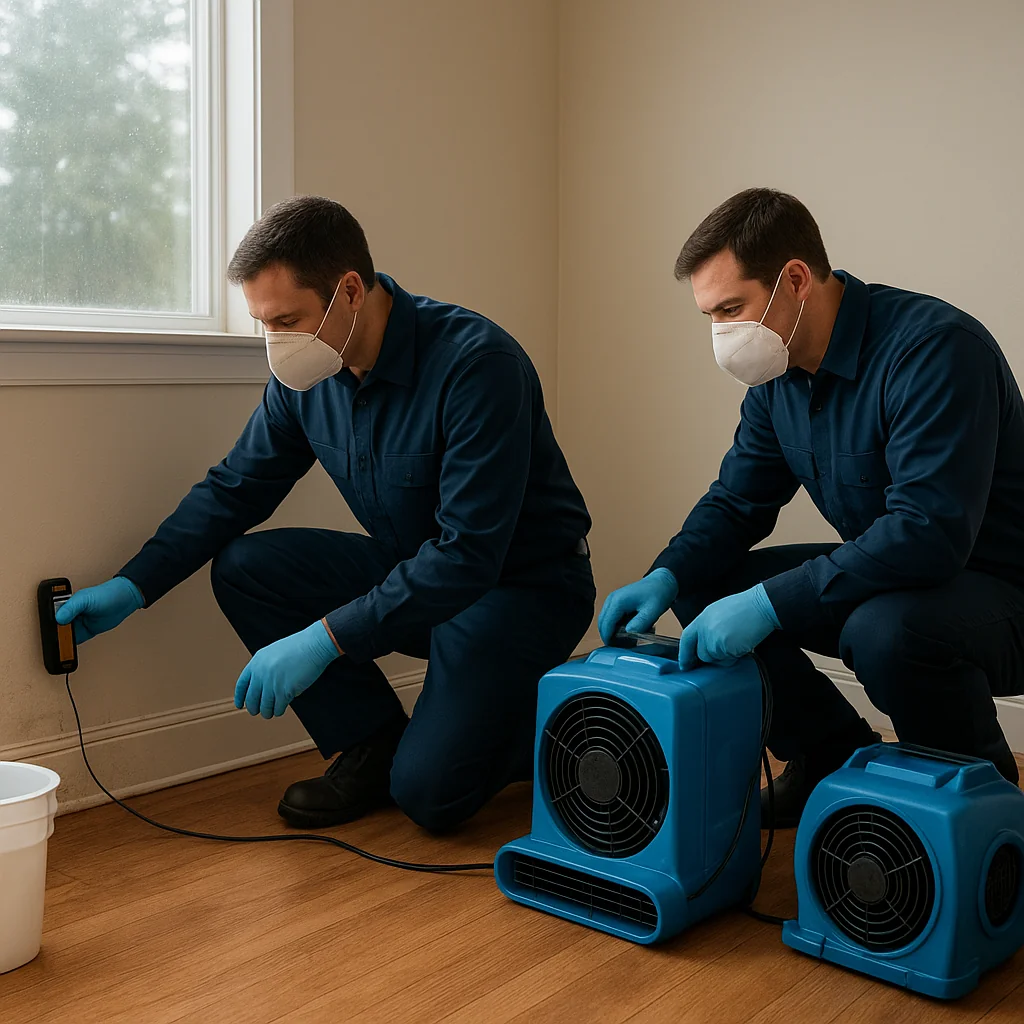
After a flood in Olympia, start mold prevention by extracting standing water within the first 24 hours, using fans and dehumidifiers to dry surfaces fast, and discarding porous items like carpets that hold moisture. Olympia’s constant dampness from Puget Sound rains means mold can start growing in as little as 48 hours if you don’t act quick. I’ve seen it ruin basements in NW Olympia homes after just one heavy winter downpour.
Floods hit Olympia hard during our wet seasons, and mold follows right behind if water lingers. As a storm damage cleanup pro here, I’ve walked into hundreds of homes where unchecked water turned into black mold patches, forcing full gut jobs. Getting ahead of it saves your structure and health—especially with our humid air keeping things soggy long after the rain stops.
How Floodwater Turns into Mold Problems Fast
Floods in Olympia aren’t just rain; they’re from swollen creeks like the Deschutes River overflowing or poor drainage in older neighborhoods. Water seeps into walls, floors, and crawlspaces, creating the perfect mold setup: moisture, warmth from our mild winters, and organic material like wood framing or drywall.
Category 1 clean water turns dirty fast in our silty soil, picking up bacteria. By day two, mold spores—always floating in our damp air—land and multiply. In a recent job off Black Lake Blvd, water sat under vinyl flooring for 36 hours, and we found sporulation already starting on the subfloor.
Common Causes Specific to Olympia
- Heavy Rains and Storms: November to March brings 10-15 inches monthly, overwhelming gutters and downspouts on 1950s ranchers.
- High Water Table: Near Capitol Lake, groundwater rises with floods, pushing moisture up from slabs.
- Aging Plumbing: Galvanized pipes in pre-1980 homes burst under freeze-thaw cycles.
Warning Signs of Impending Mold Growth
Don’t wait for the musty smell—that’s already too late. Look for these early indicators I’ve checked on countless sites:
| Sign | Severity | What It Means |
|---|---|---|
| Warped baseboards | Low | Moisture wicking up 12-18 inches; dry now or mold follows. |
| Soft drywall edges | Medium | Water penetrated paper layer; cut out 12″ above damage. |
| Persistent damp spots | High | Hidden saturation; needs pro moisture meter reading over 17%. |
| Earthy odor | Critical | Mold active; evacuate if in HVAC. |
In South Olympia, clay soils hold water longer, so soft spots under carpet often signal deeper issues.
What to Do Right Now: 48-Hour Action Plan
You can handle initial steps if safe—no standing water over 2 inches or electrical hazards. Here’s the pro sequence I teach homeowners:
- Shut off power and gas: At breakers, not main panel. Flooded outlets spark easy.
- Extract water: Wet vac for carpets, buckets for hard floors. Rent a truck-mount extractor if available—beats shop vacs.
- Ventilate and dry: Open windows if outside air is drier (rare here), run box fans outward, set dehumidifier to 40% RH. Aim for under 50% humidity.
- Remove saturated items: Pull up carpet padding—it never dries fully. Bag and trash drywall below waterline.
- Disinfect hard surfaces: 10% bleach solution or hydrogen peroxide; rinse after 10 min.
DIY works for small spills under 100 sq ft. Anything bigger, or if you’ve got basement flooding cleanup needs, stop and call pros—moisture meters reveal hidden problems.
How Pros Like Us Tackle It On-Site
We roll in with industrial gear you can’t rent locally. First, thermal imaging cameras spot cool, wet areas behind walls—up to 2 feet deep. Then, air movers (20+ per job) create 500 CFM wind speeds, paired with commercial dehumidifiers pulling 100 pints/day.
For Olympia homes, we inject antimicrobial into wall cavities before cutting. In one NE Olympia case, we dried a 1,200 sq ft crawlspace in 72 hours, preventing $20k in demo. We document moisture levels pre/post for insurance, hitting under 12% before rebuild.
HEPA air scrubbers filter spores during work, tested to 99.97% efficiency. No cutting corners—our vans carry ATP swabs to verify clean surfaces.
Olympia’s Climate and Homes Make Mold Tricky
Our marine climate keeps relative humidity 70-90% year-round, worse post-flood. Add 40-60 year-old homes with minimal vapor barriers, and drying takes longer. Winter storms from the Pacific dump 5 inches in days, saturating South Sound soils that drain slow.
In older Capitol Hill bungalows, crawlspaces flood from surface runoff, staying wet weeks. Newer builds fare better with proper grading, but still—probes show 20% moisture in untreated vents.
Long-Term Prevention for Olympia Winters
After drying, seal it right:
- Upgrade drainage: Extend downspouts 5-10 ft from foundation; install French drains if on slope.
- Vapor barriers: 6-mil plastic in crawls, taped seams.
- Dehumidifiers: Whole-house units for basements, set 45-50% RH.
- Inspections: Annual crawlspace checks October before rains.
- HVAC filters: MERV 13 to trap spores; clean coils yearly.
For burst pipes mimicking floods, check our burst pipe water damage guide. These steps cut repeat calls by keeping moisture out.
When to Call a Pro in Olympia
DIY small jobs, but call if water’s over ankle-deep, hits HVAC, or you see structural sagging. Extensive damage needs IICRC-certified pros for safe, complete dries—insurance often requires it. In Olympia, reach Olympia Storm Cleanup Pros for storm damage cleanup; (360) 299-5978 gets us moving fast to protect your home.
Leave a Reply