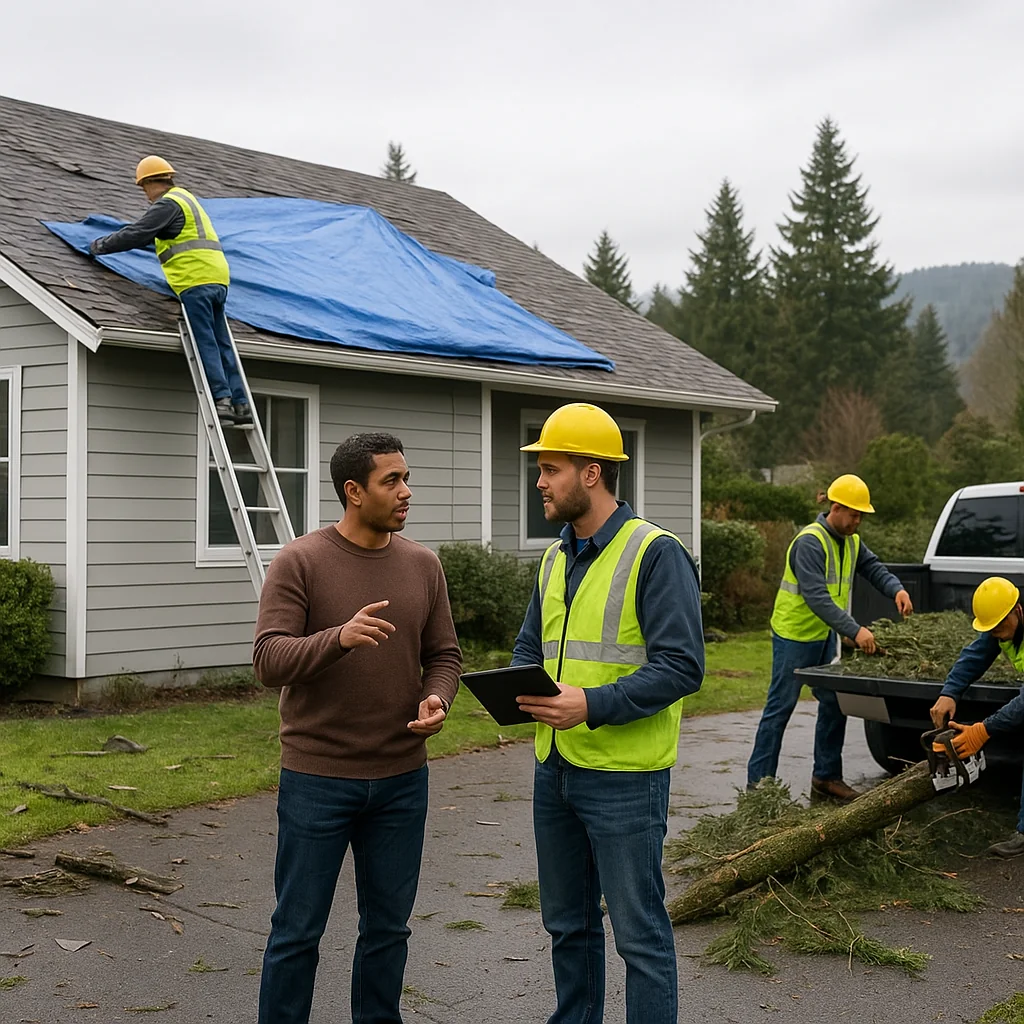
After a storm hits your property in Thurston County, prioritize safety by staying clear of downed power lines and unstable structures, then document all damage with photos before making temporary fixes like tarping roofs or boarding windows. In Olympia, where relentless winter rains follow gale-force winds, these steps prevent further water intrusion that could lead to mold in our damp climate. Acting within the first 24-48 hours makes all the difference in minimizing repair costs.
Storms roll through Olympia and Thurston County regularly, especially from October to March, battering roofs, flooding basements, and toppling trees onto homes built decades ago on our soggy soils. I’ve pulled saturated insulation from attics and shored up sagging decks more times than I can count, and the key is knowing what demands immediate attention versus what can wait. This guide walks you through it based on what works here locally.
Common Causes of Storm Damage in Thurston County
Our stretch along Puget Sound means northwest winds whip up to 50-60 mph during atmospheric rivers, ripping shingles off roofs and snapping branches from mature firs and madrones that crowd older neighborhoods. Heavy rain—often 2-4 inches in a day—overwhelms gutters on 1960s ranchers common in South Olympia, causing interior leaks. Then there’s flash flooding from our high water table and clay-heavy soils that don’t drain fast, pushing water into crawlspaces. Fallen trees account for about half the claims I see, crushing roofs or siding, while wind-driven rain sneaks under eaves.
Warning Signs You Can’t Ignore After a Storm
Look for these red flags the morning after: water dripping from ceilings, often in fanlight patterns from roof breaches; sagging or missing roof sections visible from the ground; buckling siding or soft spots on exterior walls when you press with a screwdriver. Inside, yellow-brown stains on walls signal hidden leaks, and a musty odor means moisture’s already fostering mold—critical in Olympia’s 70-90% humidity. Structural issues show as doors that stick or floors that creak more than usual. Use this table to gauge severity:
| Sign | Severity | Action |
|---|---|---|
| Drips from ceiling | Low-Medium | Tarp roof, buckets |
| Sagging roof deck | High | Evacuate, call pro |
| Mold smell in 48 hrs | High | Extract water now |
| Cracked foundation | Critical | Engineer inspect |
If you spot high-severity signs, don’t climb ladders—winds leave things unstable.
Immediate Steps You Can Take Safely
First, safety: turn off electricity to wet areas at the breaker, never touch standing water near outlets. Grab your phone and photograph everything from multiple angles for insurance—adjusters here love details. Tarp any roof holes using 6-mil plastic and 2x4s battens; I’ve seen tarps hold for weeks in our rains if secured right. Clear gutters and downspouts of leaves/debris to divert runoff. For standing water in basements, use a wet vac or pump it out to under 1 inch, but wear PPE—raw sewage from overwhelmed septic systems is common post-storm. DIY stops here; deeper water needs pros for extraction.
- Assess exterior: walk perimeter for tree limbs, debris.
- Secure openings: plywood over broken windows.
- Ventilate: fans and dehumidifiers if power’s on, but monitor for mold.
These buy time, but skip if unsafe.
How Professionals Handle Storm Damage Repair
On-site, we start with a moisture meter scan—readings over 17% mean drying’s needed. For water damage, flood water extraction uses truck-mounted pumps to pull gallons per minute, faster than shop vacs. Then air movers and desiccants target hidden spots like wall cavities. Roof repairs involve stripping to dry plywood (often 3/4-inch here), replacing with ice-and-water shield under asphalt shingles suited to our wet snaps. Tree work requires cranes for big firs; chainsaws alone risk further damage. Full jobs take 3-10 days, depending on extent—insurance covers most if documented.
For urgent cases, emergency storm damage cleanup gets us there in hours, stabilizing before full demo.
Olympia’s Unique Challenges with Storm Damage
Our marine climate delivers 50+ inches of rain yearly, with El Niño winters spiking wind events that shear branches from 100-foot trees shading SE Olympia homes. Older post-war houses on slab or crawl foundations sit on expansive clays that shift when saturated, cracking slabs or heaving piers. Capitol Lake area floods push silt into yards, complicating cleanup. Summer dry rot from trapped moisture weakens framing before the next gale. Locals know: post-storm humidity lingers, so drying must be aggressive or black mold sets in walls within a week.
Seasonal Patterns
- Nov-Feb: Wind + rain = roof/tree damage
- Mar-May: Thaw floods basements
- All year: Microbursts from Sound
Prevention Strategies for Thurston County Homes
Trim trees annually—hire arborists for co-dominant stems prone to split. Install leaf guards on gutters; heated ones prevent ice dams in rare freezes. Elevate vents 12 inches above grade to block floodwater. Roof maintenance: inspect for curled shingles every fall, replace valleys with metal for longevity. French drains or sump pumps shine in low-lying spots near Budd Inlet. Insulate pipes against cold snaps that burst them, leading to secondary floods—I’ve fixed plenty tied to storms.
These cut risks 50-70% based on jobs I’ve done.
When to Call a Pro in Olympia
DIY minor tarps or debris, but call for water over ankle-deep, structural sags, electrical issues, or mold signs. In Thurston County, permits often needed for roof work over 100 sq ft, and pros navigate Olympia codes seamlessly. Reach out to Olympia Storm Cleanup Pros for burst pipe water damage or storm jobs—we’re local and respond fast. Dial (360) 299-5978 when it’s beyond your scope; waiting costs more.
Leave a Reply